0:05
Hello and welcome to the Kosh the People's Podcast.
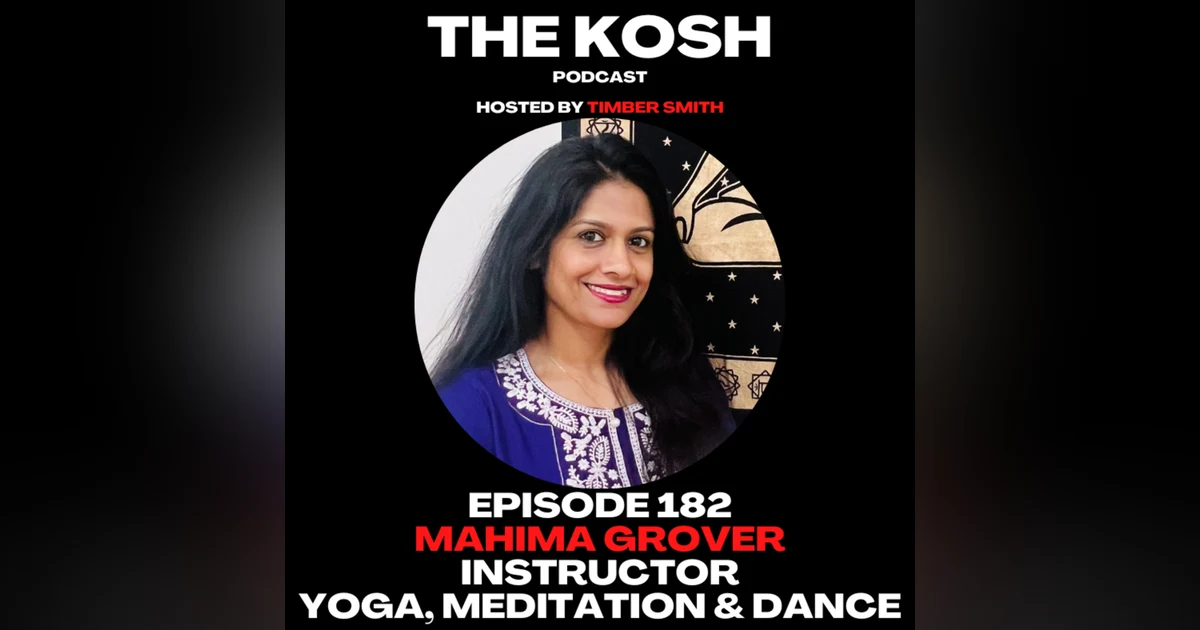
I'm your host, Timber Smith, and the Kosh is a podcast that spotlights people who've had an association with the Kosh and the surrounding Fox Cities region.
0:23
Kosh listeners, how are you doing?
It's another amazing morning here in the Kosh.
I'm excited, as always.
Why 'cause it's podcast day and it's the holiday season.
I get geeked for the holiday season.
We've already gotten past Black Friday, so know that I've spent a bundle of loot on too many presents and I can't help myself.
0:46
You know what I use Black Friday for?
I use Black Friday for buying all the things that I was saving up all year to buy because it's going to be the best price the year during Black Friday.
So that's usually what really happens besides all the presents that I do also buy a bunch of practical things for the house because hey, it's never going to be cheaper than it is on Black Friday.
1:07
So like I wait for Black Friday.
Like seriously, it's like the best weekend of the year.
And I'm an old Black Friday or from back in the day.
I don't know if y'all remember when Black Friday legitimate was crazy.
It was one day and people would get up at like 12-2 AM, 3:00 AM and be waiting at the doors of stores and the minute they cracked them open, everybody would rush in and it would be, it would literally be like an athletic event.
1:38
It was crazy in there.
I used to love Black Friday.
Me and my wife would get up.
We would do a majority of our Christmas shopping.
We'd take walkie talkies with us and radio each other.
We ran around the stores and tell each other, pick this up, go get in line, I'll meet you there in 10.
1:53
And just all of these things to coordinate it.
And we would hop store to store to store.
Black Friday used to be an event.
It is not the same anymore.
It is kind of calmed way down now.
And now everything's online and it's you go in there and the story's all quiet and calm.
2:09
That is not the energy that used to be Black Friday.
If you remember that, you should holler at me and tell me your Black Friday stories because I think there's some pretty good ones out there.
OK, cash listeners, as you already know, I am always excited.
2:26
Well, why?
Because, well, you already know what's coming.
I don't know how I continue to get these amazing, amazing guests.
And I'm super excited about this week's guest.
I think we're going to talk about some pretty cool things.
2:44
And then again, I'm not sure what we're really going to talk about either.
It's going to be a little bit of a mix of I think I know what's coming and then I'm not quite sure what's coming.
But the most important thing is my guest is a fire guest.
So without any further ado, this weeks guest is Mahima Grover.
3:06
Hey Mahima, how you doing?
Hi Timber, I'm good.
Thank you for having me today.
I am very excited to have you here today.
How's your day going so far?
Good, good, absolutely amazing, lovely sunshine out.
Even though it's super cold, I can, I can live with that.
3:25
The sun is something that makes me happy.
Oh, I'm with you on that.
Give me sun, Don't just give me cold.
Yes, like gloomy and cold is.
Wrong on so many levels it.
Is on so many levels, but if if there's at least sun and it's below it's above zero, I have to qualify that because when we start getting below 0 then even sun doesn't say doesn't.
3:51
Make any difference?
Yes, I know what you're talking about, Yes.
But yes, the day has been good and I'm happy to be here and having this conversation with you.
So yes, so far so good.
So far so good.
Well, I promise you it's going to get better because it is podcast day, I am sure.
4:10
And before we go any further, I'd like to say that this episode here is sponsored by Timber Ties.
Once again, Timber Ties.
We have a website, itistimber-ties.com.
It is a it is a website for wooden bow ties and wooden brooches.
4:28
Check it out if you do not know what to buy the person that has everything, A wooden bow tie is the thing to get them.
It is distinct, it is a conversation piece and it is fantastically bold and stylish.
4:44
Check it out and let me know how y'all feel about them too.
OK.
So Mahima, you ready to jump in?
Yes.
OK.
Can you please share a little something about yourself and your connection to the Kash in the surrounding Fox Cities region?
5:02
Timber I would like to start today with a small invocatory mantra.
This is one of the Shanti mantras that I use regularly before I start any session.
5:48
Home shanti shanti shantihi.
What it means is may we work together so that we protect each other, May we work together so that we nourish each other.
6:07
May we create energy, positive energy during this interaction, and may we create brilliance with this interaction that we have and maybe have no conflicts during the interaction today.
6:24
May there be peace within you, may there be peace outside of you, and may there be peace in the entire world.
Thank you.
Facts.
So my name is Mahima Grover, as you have already introduced me, and I am an Indian.
6:45
I was born and raised in India and I moved to the US in 2015.
So I moved to the US with my husband.
He was the one who moved to US with his job, and I moved here with my two kids.
We moved to Seattle.
7:00
That's where we first landed.
We were in Seattle for a year, and then my husband got an opportunity to work with Bemis here in Appleton, and that's how we moved to this city of Appleton. 2020 is when I got my EADEAD is the authorization, the legal status to start working in the country.
7:26
So I was not allowed to work before that.
But 2020 is when I finally got it.
But then 2020 is when COVID hit.
Yeah.
That's that's facts.
So I already had my yoga teachers training certification from India and that is what I wanted to do in the community and thankfully I got an opportunity with the YMCA.
7:50
So I started taking classes at the YMCA.
I had a few classes at the Appleton YMCA and then a few at the Nina YMCA.
And that is how I started my journey as a yoga instructor here.
And eventually I think I worked with the YMCA for around two, 2 1/2 years.
8:08
And then I realized that I have far more things to offer to the community and far more classes at different times that I wanted to offer and which was just not getting.
I was not able to achieve that at the Y.
8:25
So that is where I thought, let's go and open a studio.
And so finally I opened my own yoga meditation in a dance studio in 2020.
Was it 2023?
Yeah, 2023.
8:41
So that is how I'm connected to the Fox Cities in the entire region, the Appleton, the Neenah and the Oshkosh.
So my family includes my two kids.
I have a 16 year old daughter who is a sophomore, my 12 year old son, and a very, very loving husband who always supports me.
9:03
And it is in fact because of me, him, that I'm here.
It is because of his support, is because of his motivation that I'm a studio owner today.
So I don't want to get this wrong, but be because you're a yoga instructor, are you considered a Yogi or is that a term?
9:24
Is that a level of yoga instructor?
You know, you hear the term all the time and it's thrown around, but I want to know what does it really mean?
A.
Very good question.
So a yoga instructor a teaching yoga also comes in various phases.
9:41
So I am a there is a yoga instructor, there is a yoga teacher, there is a yoga guru, and then there is a Yogi.
Right.
So if I start the journey, a yoga instructor would be someone who is simply instructing and guiding a student to do certain poses.
10:00
And I would say a yoga instructor is at a superficial level of the practice.
A yoga teacher would go and dive deeper with the student and kind of hold hands with the student and try to understand what the student needs in that moment and guides and gives instructions for that particular student specifically.
10:24
And it's still at the physical level and breath level, you know, breath work, pranayam, everything will come.
A yoga guru would be now guru.
If you look at the word Guru, Guru is made-up of 2 words which means a person who removes darkness from your life.
10:44
Wow.
OK, so a yoga guru, If I look at the word guru and I I'm truthful to that word guru, then I or that person is that person who removes darkness from your life.
Now what is darkness?
The darkness of ignorance is what the purpose and the aim of guru should be.
11:05
And what is ignorance?
Ignorance in yoga would be not knowing your true self.
So these are the various stages and we can have an entire podcast for the next two hours only discussing about this, how an instructor and how a teacher and how a guru is different.
11:25
Now.
A Yogi is a person who is no longer attached to the world at that grass root level.
A Yogi is a person who has to some extent found out who that true self is, who who he or she is within themselves.
11:44
So a Yogi would not be attached to the student in the sense that if you go to a Yogi, he will share, he or she will share whatever information and knowledge they have.
But they're not attached to you.
They they don't.
They don't.
It doesn't matter to them whether you learn from them, whether you understand.
12:02
No, a Yogi is a person who's already, I would say an enlightened soul who knows who or she is the true aspect of them.
So I think a Yogi is a different story and a different narrative altogether.
12:19
And I have yet to meet a Yogi real life.
And a Yogi would not ever come in front of you and say, hey, I'm a Yogi, you know, look at me.
They.
Would never tell you never.
OK, that makes sense.
Never, because they are.
They're detached from their ego.
12:35
They're detached from all the the various labels that we humans give to ourselves.
So a Yogi is a different story, but then a yoga teacher and an instructor and a yoga guru is something that you can definitely meet in the real world.
12:53
OK, so you called yourself a yoga instructor.
I would still call myself somewhere between a yoga instructor and a teacher, OK?
I would keep myself there, yes.
What drew you to yoga?
13:10
Let me tell you a story.
So yoga.
We all know yoga came from India, right?
And not just India, it came from ancient India.
So yoga has been in the fabric of our Indian society and culture for eons.
They have found out certain artefacts which are as old as 7 to 8000 years old in which they in which a person is sitting in a yoga yogic meditative pose.
13:39
So imagine the society which has yoga in the very fabric of its existence.
So growing as a child we used to learn yoga in the school, right?
So there was nothing that drew me to yoga.
13:54
Yoga was there.
It's just part of.
It is just.
It just is.
It just is, and it's not something that you have to strive to achieve.
It's there, right?
So of course, when we were in the school, we used to be taught yoga.
But then it's always an option for you to learn it and take it to whatever level you want to take it to.
14:17
I remember a friend of mine when I was in 6th or 7th grade and she used to learn yoga and she was a really accomplished yoga practitioner.
She was a young girl and she used to do all pretzel poses that you can think of and she used to be an amazing yoga practitioner.
14:38
So I used to look at her, but I never learned it that way.
When I was younger, yoga was reintroduced to me when I was working in my corporate life.
I was working with one of the hospitals and I was a training manager there and there was a yoga teacher who used to come and in the evening she used to take some yoga classes for the employees of the hospital, you know, the nurses, the doctors, anyone who's interested to kind of wind down from the day.
15:03
So yoga was again reintroduced to me while I was working there and I I started practicing yoga with that teacher and I continued practicing yoga throughout my 2 pregnancies and then finally when I gave birth to my son and I was like I want to know more.
15:22
I want to learn more about yoga.
So my son was born in 2013 and it was in 2014 that I joined my teachers training certification in India.
So yoga has always been in my life.
It was just a very conscious decision on my part in 2014 to finally learn yoga from a proper teacher in a structured environment, and that is when I got my teacher certification.
15:49
OK.
So you brought up another part of you which is this corporate life.
Can we talk about that?
What did you used to do?
OK.
So I'm a Bachelor of Pharmacy graduate.
That is what I studied in college.
16:05
Then I worked in the Pharmaceutical industry for around 1 1/2 two years and I was in the sales and the marketing department of that organization.
I think it was within first two months that I realized I'm not cut out for that, the sales and marketing thing.
It takes you know what it takes a certain personality for sales.
16:25
It does.
And I'm so thankful that I was, I was a very young girl at that point of time and I'm very thankful that that realization came pretty early on in my life that this is not me.
This is something that I cannot do.
And once that happened, I was like, OK, so marketing and sales is out of the way, So what is it that I can do now?
16:45
So I had already left my home and I I was like that independent streak is there that you don't want to go back.
No once parents, right?
Once you leave, you do not want to go back to that set of rules.
And I was like, well, I, I'm an, I'm, I'm, I'm an educated graduate and I'm, I've already worked and I'm not going to go back and start living with my parents.
17:07
So those were dire times.
So I was like 2223 years old and I was like, no, I have to figure out a way.
And then at that point of time, I started working in a small organization.
It was a back end, kind of a, you know, call center kind of a thing, helping out people, helping out customers.
17:26
That is what I did a few months and I was just figuring it out and I knew that again, this is not something that I can do.
I, I knew that I wanted to do something more with my education and my skill sets that I had.
And that is when I fell in love with my dear, dear husband.
17:46
And that is where profession, I would say took a kind of a, it was something that was not something that I was worried about my profession.
What is it that I'm going to do with my I would say my love life took precedence.
I was still working with a company called General Electrics.
18:04
GEI was working with them.
I worked with them for around a year, year and a half.
And then during that time, I got married.
And once I got married, my husband was like, you know, Mahima, this is not something that you are cut out to do.
You have far more potential.
18:19
And what is it that you want to do?
And I said, you know, if that was a great question that he asked me, he said if there were no worries in your life, there were no do's and don'ts, what is it that you would like to do?
And I said I would like to become a trainer because that is what I had seen when I was when I joined my first company.
18:38
And we were trained by a corporate trainer for the sales and marketing.
And I think there were two or three young men who trained us and I was super impressed by them of how they train people, how they teach people various skills.
18:54
And I was super impressed by that.
So I was like, if, if everything falls into place, I think I want to become a corporate trainer.
I want to train people.
And I think I have the capability to do that.
He said, then what's stopping you?
Let's, let's find out how to make this a reality.
And he guided me, my husband guided me that go reach out to people, talk to people, talk to those senior trainers, whether they would take you as an intern, You know, that is a great way to start.
19:21
And I've been a very lucky person in that sense that I I reached out of to a very, very accomplished trainer.
His name is Mr. Sukdeep Akmal.
Why I would love to take his name.
He was the one who gave me the opportunity to work with him to learn what it is to be a trainer.
19:41
He just took me in, you know, he just met me, took my interview.
He said, OK, you are a good person, you, but you need to do these three or four things.
When you're done with that, come back to me and I'll hire, I'll hire you.
And that's what he did.
And I started working with him.
19:58
That was 2005, right?
So 2005 is when I started my entire journey in training.
And then there was no looking back with him.
I worked with him for two years.
Then I moved to this hospital, the Fortis Healthcare System.
20:14
I worked with them for around 3 years.
Then I moved to another city, Pune.
I worked with an IT company, Tech Mahindra.
I worked with them for so many years and then I took a break for my kids.
20:30
I was pregnant, my daughter was born and I was, yes, I took a break.
I never came to my head that I should just, you know, juggle it between work and my kid because there was there is a, there is a deep story behind that as well, because I had a miscarriage before my daughter was born.
20:52
So that was a traumatic experience for me.
And then when my daughter was born, I was in a different mind space in the sense that I was like, I am going to spend time with my daughter because she is a blessing.
Right.
I am not going to take it for granted.
21:07
And I'm very lucky to have a partner who supports me.
I'm a very lucky to have a partner whom I trust blindly.
And I can say that, oh, I don't need to work and I can just stay at home, take care of the child, take care of the house.
And yeah, and that's, that's how my corporate life was.
21:25
So in corporate world, I was a training manager.
I was leadership.
I used to take trainings in leadership, stress management, communication skills, team building, team bonding, you name it.
And I used to take those sessions for the middle and the senior manager level.
21:42
It's one of the greatest lessons that you learned being a trainer.
The biggest lesson that I learnt was never, ever think that you know the other person.
Never.
So as a trainer, we go into a session thinking that, OK, these are the five things that I'm going to talk about.
22:01
And then you go into the session and you come face to face with the participants of the session and you realize, oh brother, this is not going to work.
Right.
So you should always, always have that healthy respect for other people and their stories and their narratives.
22:20
Facts.
Right, because never ever think that you know the other person, be humble.
Never ever have that sense of achievement in your head that oh, I'm the trainer and I know everything and I can solve every problem that the other person might have.
22:38
Never going to happen you.
The biggest thing that I've learned is just listen and allow the person, the other person to talk because they have the answers.
They just want someone with whom they can talk, with whom they can open up and have faith in the other person that they will find the answer.
23:00
So as a trainer, you don't train anyone.
You just train yourself to be a good listener.
I love that.
Yes, just listen and just ask the right questions at the right time and let the other person find the answers because the answers that they come up with are the ones that will work for them.
23:20
So that's the biggest thing that I've learnt.
That is true.
OK, So what we have learned is you yoga instructor Mahima, we have learned corporate trainer Mahima.
Yes.
I think what we need to ask about now is dancer Mahima.
23:41
Yeah, I'm I'm covering all sides.
I'm.
I think I'm covering at least I'm covering 3 major sides yes.
What do we need to know so?
Dancing is something that is an inherent part of each one of us.
24:00
Now somebody might say, oh I don't know how to dance.
You know, I'm a bad dancer.
I I've got 2 left feet, blah blah.
I believe everybody can dance.
Now the labels of a good and a bad dancer is what stops us from dancing our hearts out.
24:18
But everybody's a dancer and if somebody can embrace that, just move their body with the music, whether it is In Sync with the music or not, whether it is in rhythm with the beats or not does not matter.
Just learn how to move the body with I can abandoned.
24:36
So for me, dancing, if you really ask me, dancing is my passion.
I would even keep dancing one step ahead of yoga, meditation and whatever I do in my life.
So dancing is my passion.
You give me an opportunity to dance and I'll dance and I will never say no.
24:54
I will create time to dance.
So the dancing that I do in this community is all volunteer activities that we do.
So you know, somebody invites me to dance and it's all volunteer.
So I'm not getting paid for it ever.
It's just that I go and I dance and I share what I have to share.
25:12
And so many a times what happens, I face difficulty in organizing the team, you know, to find out those people who would join me in in my group and dance and practice for a week or a month and then we go and then we do that dancing for three minutes.
25:30
So there's only one person I've found till now, which is my dear, dear friend Seema.
I have to just call her and say, Seema, this is when we are dancing, this is what we have to do.
And she's like, yeah, let's go ahead, let's do it.
She's your ride or die.
The other person, Anandita, you tell her, Anandita, this is where you have to dance.
25:47
She's like, yeah, let's go do it.
When?
Give me the time, give me the place.
I'll be there.
Oh fax.
So dancing is like, I don't know that fire within me.
It's like you, you play a song and my body starts moving.
26:03
And I am grateful to my mom, my mother, who identified this thing in me as a child.
And as a child, I was a very naughty child, you know, a lot of energy running here and there and this and that, playing games with my friends, going out and riding a bike with my friends, never staying at home.
26:24
But my mom put me in these dance classes.
This is the classical dance form of India Kathak, and she never let me leave that.
So it was a diploma program, it was a four year program and I was a young girl.
I was I think in grade 4th.
26:39
So imagine a great 4th girl.
I mean, dancing was the last thing that I wanted to do.
That was the, I mean it was like a waste of time for me.
But she never, ever let me take a break.
She said no, you have to finish it.
And I'm so grateful for that because what you learn when you are a child, something that you learn as a child, you can never forget that grace, that rhythm, that understanding of the beat that I learned as a child is still there with me.
27:07
So that is one thing, the Indian classical dance that I learned and then thereafter when I was in the college, I used to dance in all the festivals that used to have in, you know, college.
So I used, I used to dance in the festivals and of course in the hostel when I used to stay with the with my friends.
27:28
Any birthday party and we are dancing, right?
Anything that we have to celebrate, let's dance.
So for me, dancing is something that's so close to my heart.
And before anything else, I think I'm a dancer.
Oh my God, thank you.
27:47
Thanks.
I felt that.
I felt everything about that.
I you know, dancing is and you're right.
You don't have to be a dancer to dance.
No, you just need that song or that music that you feel and just move and do you think about people?
28:06
Stop worrying about what everybody else thinks, right?
Just.
Forget anyways, they don't care, right?
And the ones that do they're, they're not focusing on trying to dance.
So true, right?
Yes.
'Cause if they're worried about them dancing, you don't worry about how other people are dancing.
28:24
Yes, yes.
So if you want to dance, Just Dance.
Facts.
Big facts.
OK, I think we dug in pretty well.
So, well, if you weren't doing what you're doing right now, what would you like to be doing?
28:45
What I'm doing right now where I am today has been a very, very conscious effort on my part.
I mean, I have very consciously brought myself to this.
Of course, when I say consciously brought myself to this does not show me that, oh, I'm, I'm not trying to portray that.
29:02
Oh my God, I'm so I'm all powerful.
Mahima Grover, who has taken these steps and see where am I?
No universe has helped me.
Of course, God, whatever whatever word that might be, has helped me to be where I am today.
So a studio owner, a yoga instructor, a dance instructor, a meditation instructor is something that I always wanted to be the way I always wanted to be, a corporate trainer.
29:29
And then I became a corporate trainer.
So where I am today is where I would want to be.
And there is no other place that I would want to be than where I am today.
And I'm very happy to be here today like talking to you here.
29:46
This day didn't just come like this, right?
There is there is there is an intention behind it, right?
So I wouldn't want to be anywhere but here.
Let's say in a parallel universe, let's say I did not have a studio and I was stay at home mom taking care of my kids.
30:07
I would have been happy there because I think that is the kind of person I am.
I, and that is something that I am, have always been just happy, satisfied wherever I am, whatever life throws at me, I accept it with a thought that there is a reason behind why I am seeing this day or why I'm meeting these new people or why I'm experiencing these new things.
30:39
There has to be a reason behind it, so I don't know.
I you put me anywhere I would be, I'd be OK being there, happy there.
Like that?
But wherever I am today, this is where I would want to be because I have put conscious effort, I have put taken thought out steps, I have planned and for this day to happen.
31:06
So I would not want to be anywhere.
This is where I am going to be today and I'm going to enjoy it.
Facts.
All right, Mahima, let me ask you this then.
I have been blessed in the last two years to have like a, a best friend who's from the Indian culture and I've learned a ton, an absolute ton from them and have just awakened all sorts of human aspects is what I'll say of just understanding different people from different places, but how we are so similar.
31:46
What could you share with the cash listeners about the Indian culture that you think would be helpful for people to just understand?
Oh my God, you're, you're giving me a huge responsibility.
32:05
It is a big responsibility, but don't I, I I would not have given it to you if the shoulders were not strong enough to hold.
But OK, a word of caution, whatever I share today about Indian culture is my opinion.
32:25
Facts.
OK, Other Indian people listening to it, they might not share my opinions, they might disagree with those opinions, which is fine.
And there is in no way I want to offend anyone because nowadays people do get offended very easily so.
32:48
But.
They're shooting that.
That is how I'm going to start the whole conversation.
First, I'm not here to offend anyone.
Second, I am only voicing out my opinions and they're all all these opinions that I have made about not just the Indian culture but about everything in life is my personal experience because that is what yoga has taught me in so many years, that experience at the grass root level.
33:17
Use your intelligence, use your prefrontal cortex to understand what is happening.
Make your opinions.
Have the humility to change your opinions as per new data.
You know if you see anything new coming in your life, oh you had certain values, certain beliefs, you should have the strength to change those as per the new data that comes in your life.
33:40
So Indian culture, the 1st and the foremost thing that I want to share today is that it is one of the most ancient cultures of the world right now.
The ancient culture, when I say a highly intelligent culture, because if you look at the scriptures that were written in the Indian culture, if you look at the Vedas, the Upanishads, the Bhagavad Gita, all these names, when you, if anyone of your listeners want to know more about these, they just need to put these words in.
34:15
I don't know, ChatGPT, Google, whatever, you will know what I'm talking about.
These scriptures, they have been written by groups of people who are enlightened, people who are so intelligent, who were so insightful and that very culture is driving the entire country today, right now.
34:41
India as a country was, has always been invaded by so many other adjoining clans and kings and those kind of things.
So the northern part of India, if you look, it was always invaded by, you know, Mughals, the Mongols, so many things happening.
35:01
So the northern part of India is like a, a mixture of so many cultures, right?
So that's what the beauty of Indian culture is.
We were and we have even today, we are like, we are, we are people who are open.
We are, we will embrace anything new, right?
35:19
We are not very rigid.
So that is what you'll see in the country that the northern part of India, there is, there are, there are cuisines from Afghanistan, there are cuisines from Mongolia.
There are the, the language changes.
So the Indian culture, the one word that defines Indian culture is openness.
35:41
Just, we are just open.
We are willing to experience whatever is thrown at us and our scriptures, our religion, Hindu, Hindu religion is about that.
Ask If don't, don't.
OK, something is written in scriptures.
35:58
If you don't agree with it, if you don't believe in it, question it.
Find out another answer.
If you think.
If you think that you don't agree with it, OK, You have all the right to question it.
And if you have a different experience, share it.
So Indian culture is all about colours is that's what people outside of the country think of, you know, amazing food, spices, dances, colours, you know, jewelry, dresses, Yes, that's, that's the outside, the, the, the outside facade of the culture.
36:30
But if you go deeper into the culture, I think the one word is that we are just open.
We are.
And that's my experience, because if I consider myself as an Indian, I think I am an open person.
I'm like, yeah, I'm willing to learn about your culture.
36:45
I'm willing to learn about your religion.
I'm willing to learn about your language.
And I'm willing to make myself better in the process.
That is what Indian culture is.
Now.
Each culture has its goods and the bads.
And so the Indian culture is also there.
37:02
So traditionally, Indian culture was a very matriarchal society.
We were a very, very matriarchal society, The ancient, the very ancient Indian culture and then the outside influences, you know, the Mughals, the Britishers, and so many people came in that the society changed.
37:25
So today the society is different than ancient.
But then, at the heart, we are all the same.
What surprised you the most about moving here?
That we don't talk to our neighbors.
37:42
That was the biggest shock for me in India.
Like you're here and the neighbors right next to your house, you know, I can just walk down and knock on the door and then have a cup of Chai with them, then come back.
And if I'm walking out and if my neighbor is standing out, I would just stop and talk to them about random things.
38:06
If I go out and I go into the market and I don't know I in that, in that market, I would find people whom I know because I've talked to them, not just my next door neighbor, the the people who stay on the same street.
38:23
I would know every one of them.
I would know their stories.
I would know how many kids do they have?
I would know where do their husbands work.
I would know which state do they belong to.
I would know what is it that that they the, what is their mother tongue?
So I mean, I would know everything.
So that is 1 big shock that I had when I moved to this country, that people don't engage with each other.
38:47
People stay within their own small circle.
And that was something that was kind of shocking for me.
Yeah.
Because for example, when I move to a new neighborhood, if, if that happens in India, if I move to a new house, the people around my house, you know, they will come to my house and they'll be like, oh, welcome, where did you come from?
39:10
And then they know that, you know, because I'm moving, I would not be able to cook and I would not be able to manage the other regular things.
They will come and they'll give food to me.
They will ask me what is it that they want?
What is it that I want?
How is it that they can help?
It's kind of an unspoken thing in the country.
39:28
But here when we move to this neighborhood, well, I don't even know my neighbors.
Not not, I mean, I don't know my neighbors so.
But it's it's that was something that was a little shocking.
It is still shocking to me.
Yeah.
Facts and once again this I could not agree with you more and hence why we're having this conversation on the cash.
39:57
Yes.
So we can help.
Others, those within this region, get to know each other and get to know all sorts of different people with all sorts of backgrounds, yes.
And just realize like we're more the same than not.
40:15
Yes.
And most of most of all of us are inherently good, yes, and just trying to do good things for our family.
Yes, yes.
So you know what, what we did and that's where my, I appreciate my husband for that.
40:32
He is so outgoing.
So when we moved to a new house in Neenah, he kind of put that extra effort to go out and introduce himself to the neighbors.
And he went to the, the people, the two families who were living on either side of our house.
40:51
So he went and we introduced ourselves to the family living in front to the side.
And so we became friends.
You know, I think everybody wants that connection, but nobody wants to take that step probably.
So it's it's, it never harms to go ahead and push yourself out of that comfort zone and just start a conversation.
41:12
Facts.
OK, well Mahima, guess what?
We haven't even started.
We were just in the intro.
Is it?
Yes, but we're about.
Talking too.
Much.
No, you are not.
You are doing exactly what the cash is supposed to do.
41:30
We need to learn about you, but what we are going to get ready to do right now is.
Right.
41:46
Gosh listeners, you know I love that sound because that sound means that we are about to get into the topic of the week.
And the topic of the week is chosen by our guest 99.9% of the time.
And guess what?
This week isn't any different.
42:03
So Mahima, what is our topic of the week?
Oh, you said 99.9% of the time the the guest chooses the topic.
Topic of the week, yes.
Why don't you do it today?
Oh, no, wait, you already have a topic.
42:19
We are following this.
Well, I'll tell you why I don't choose it.
It's because the Kash is about the guest.
OK, Yeah.
So the topic of today would be yoga, meditation.
That's it all.
Right, let's go.
42:34
OK.
So what I want to share with the listeners today is yoga.
The word yoga is derived from the root word yuj, which means union.
Now union of what?
Union is always between two things.
So what yoga means is that it is the union between my consciousness to the supreme consciousness.
42:57
That is the the typical textbook definition of yoga.
That is something that a normal human being like me, you and the rest of the world is something that's unfathomable for them.
What do you mean by this?
43:13
Right?
The union between myself and the supreme conscious doesn't make sense to a normal man.
So traditionally yoga, what yoga I understand, is forget, but forget about that supreme consciousness and all those things.
43:30
Focus on yourself.
Let's start by focusing on ourselves.
That's the first step.
How do I focus on myself?
I start focusing on myself from my outside to the inside.
That is what the yoga scriptures talk about, the Hatha yoga.
43:48
It says that let's forget about this union bit for now.
Let's just work on that individual person.
Now, when I say the individual person, the self, I will take the entire structure of that self.
So we'll start with the physical body.
44:05
So when I say the physical body in yoga, it is known as the gross body, this Thul Sharif.
OK, so this is something that I can touch, I can feel, I can experience.
So yoga says work on your physical body, make it strong, make it healthy.
44:23
How do I do that?
I eat good food.
I nourish my body with good food.
I take care of my physical body by moving it properly.
That is the asana practice, the matte work that we do that everybody is so familiar with the the triangle pose, the the warrior pose, the sun salutations, you name it and people know it.
44:43
But what is the purpose is The purpose is to make your body healthy and strong.
That is my outer structure.
The second aspect as per yoga is your energy body, right?
The energy body, the energy that is flowing in your body.
45:00
Now, I can't, I can experience the energy but I can't see the energy, right?
So there are days when you feel energetic, then there are days when you don't feel energetic.
There are days when you feel you just don't want to get out of the bed.
You just want to curl up inside the bed and do nothing, right?
45:17
So your energy body is so closely related to the physical body and vice versa.
I can access my energy body through the physical body.
So I say I'm not feeling good, I'm not at all energy.
But then you say, OK, no, I just get up and let's start moving.
You go for a brisk walk, you come back and your energy level is up.
45:36
So how your physical body is collect closely connected to the energy body body.
What these yogis and the rishis they realized was that this energy body is so closely connected to your breath.
So there there.
So from yoga, from the physical mat work, I come to my breath work.
45:55
So the reason why we do breath work, which is known as pranayama in Sanskrit, is because it is through breath that you can access your energy.
Sit down, close your eyes, take a few deep full breaths using your belly, your chest, your shoulder blades.
46:13
Continue doing the practice and you will experience difference in your energy because your breath is connected to the energy.
And then what comes?
So my physical body, my energy body, and then there is the mental body, my mind.
46:31
Yoga was actually or is actually all about mind because it is your mind and it is your mental body that defines your perception of life, your experience of life.
46:48
Whether you'll get out of the bed or not is your mind right.
So they said that once my physical body is taken care of, whence my energy body is taken care of, then I can access my mental body.
That is meditation right now for a common man like you and me, I can't just sit down and start meditating because if I just close my eyes and that typical picture that comes in your mind when I say meditation is like someone sitting cross legged with the hands on the knees and eyes closed with a serene face and a nice smile on the face.
47:22
Oh, that person is meditating, but you do not know what is happening in his or her mind that.
Is true, right?
Yes.
So you don't know.
So meditation and mind management is something that is very, very difficult for a common man.
47:39
And yoga gives step by step process for you to access your mental body.
And it's very clear that it's not an easy task and it's not for everyone.
You need persistence, you need patience, you need consistency like anything else in the human life.
47:58
You want to learn anything.
You need to work hard on it, right?
And it is the truth.
You want to learn how to ride a bike.
It doesn't come in one day.
You want to learn your numbers and your letters.
Well, it does not come in one day.
We all know that you need to learn anything in this life as a human being.
48:15
You need to work hard, you need to be consistent, you need to be patience.
You need to have patience.
So the mental body.
So they said that you work on your body, physical body matter.
You make your body healthy.
Then you do a few breath practices and the moment you start doing those breath practices, you, your mind settles down.
48:37
And the moment your mind settles down, when I say mind settles down, what settles down?
The chatter in your mind settles down.
The moment that chatter stops and you're simply watching the breath and you're simply observing the breath coming in, breath going out, you access that self which is beyond your mind.
48:58
See, the mind is that outer structure that is given to me.
It is a central processing unit that has been given to us, but who is using the central processing unit is what the purpose of yoga is.
49:13
There is the self behind all of this.
There is a self.
There is a consciousness which is using the mind, which is using the brain, which is using the physical body, which is using the breath to experience this world which is called Earth.
Does it make sense?
Or it's to.
Oh, no, we're in.
49:30
OK.
No, no, you don't.
Please.
I don't want to make it too complicated or philosophical or spiritual.
It is not spiritual.
It is not at all spiritual.
So if I ask you, Timber, sit down, close your eyes, watch your breath.
OK.
Now, as you start watching your breath, you yourself will experience that with your eyes closed.
49:51
You can watch your breath.
So you're not using your physical eyes.
So you're watching your breath, you're watching the movement of your belly going up and down, so you're watching your physical body, and then some random thought comes in your head from somewhere.
It sure does.
50:07
And you're observing the thought as well.
The thought will create some emotion in your belly.
You can experience that emotion as well.
Who is this you?
Who is watching the body?
Who is watching the breath?
Who's watching the thoughts?
50:23
Who's experiencing the emotions?
It has to be something else which is not these four things.
And that is what the purpose of yoga is, to find out what is that true self, What is the true existence that is there within me.
50:40
All the practices of yoga are designed for a for a normal human being to use to access that potential.
See, now I've done some breath work and the mind goes crazy.
50:58
It.
Does and I've had to really practice trying to clear it and get back to the focus on the breath, correct?
And that's not easy.
That takes practice.
It does to be able to just truly get in that energy and to focus in like that.
51:19
Why would someone want to do that?
Tell me.
I mean, because you have done it.
So I want to ask you a very simple question.
Why would you want to do it again?
Something that requires you to work so hard for something that is intangible.
Well, a, because the instructor that I had told me that's what I was supposed to do.
51:41
Yes, right.
And just in the simplest terms, I'm not going to say that I necessarily understood initially the why, but it's because the instructor told me.
But once I practiced and started to achieve, I just found this peace with myself to be able to just be, to just be me in that without like all these other things intruding.
52:13
What?
Is the quality of this me?
What is the quality, the inherent quality of this me?
I don't know how to put it to words, but it felt peaceful.
Peaceful.
Yeah.
And so if I was to give it words, I felt at peace with me.
52:30
Who rocks this boat of peace?
Me.
No, I mean everything.
The world.
Your mind, Yes.
No.
Yeah.
The mind is the interface.
OK, Yes.
If I look at the mind as the interface between the external world and my internal true me, my mind is my interface, my sense organs, my eyes, my ears, my the entire central processing unit, That is that interface that rocks the boat.
52:57
So your true self, the quality of your true self, in yoga it's known as Sat Chit Anand.
Sat Chit Anand is that truthful eternal bliss.
So your true self is eternally blissful.
Your existence, you are bliss, unadulterated bliss.
53:17
What makes it tarnished is your mind.
So when you say my mind moves non-stop, it chatters non-stop.
And if I'm able to stop it right, then only I can access that true self that I am exactly right.
53:35
And everybody has that.
And if somebody is sincere about living their life on earth blissfully, they don't need anybody else, then they what they just need is then to be want to be serious about this whole journey of knowing who my who I am.
53:58
If you don't, if you're not interested, then see, the day a human being is born, he or she has to live the life on the earth and then that person will die.
The one thing that's going to happen which is written down the day you were born is that you will die.
So there is nothing very philosophical or spiritual about it.
54:17
So you, you, you, you take birth and you will die.
But what happens between those two incidents is in your hand now.
People say, you know, I want to find my purpose and this and that.
The purpose can only be found out based on your capability of knowing who you are.
54:36
If I don't know who I am, if I am just living my life within labels, then I'm not, you know, justifying my presence here.
So it is, I firmly believe that yoga doesn't come to everyone.
You know, yoga only comes to those people who are ready to start this journey of going inwards, of taking their human life seriously.
55:01
See, we are the most intelligent species on the earth, right?
The most intelligent species as per how we think, we have labeled our own selves as the most intelligent species on this planet earth, correct?
OK, how humbling.
55:17
Anyway, you look around the world and the kind of things that we do show, it shares another story.
It doesn't show that that we are the most intelligent species on the earth.
We do not even know the right food to eat, right?
55:35
I don't even know what should I eat which is good for me.
Given a choice, I will go ahead and eat trash if that is what I want to eat at that moment.
If I want, if I like that food, I will go ahead and eat trash.
Also because my tongue, my taste buds, I'm a slave to my taste buds.
55:53
So where is the intelligence in that?
In my head I know I need to work out, I need to move my body, I need to have a healthy dose of some physical movement.
Do I do it?
No, I do not do it.
So where is the intelligence?
What is the use of this intelligence if I don't use it?
56:12
But we are very intelligent when I it comes to giving excuses, whining, right?
Putting other people down, making fun of other people.
But we would never use even one iota of that intelligence to know more about ourselves.
56:33
So that is yoga.
So the process, the yoga, the word yoga is it encompasses the matte work, it encompasses the pranayam practice which is the breath work.
It goes on to meditation.
Meditation in itself is not just one single aspect in yoga, it is dharana, dhyan, samadhi.
56:54
So dharana is concentration.
You concentrate your mind on one specific point, you continue, you continue doing that, focusing on one.
Either it could be a sound, it could be a breath, it could be a mantra, it could be a deity that you want to focus on.
You continue focusing, focusing, focusing, and then you go into a state of dhyanu and then when you continue doing that, you go into the state of samadhi.
57:19
Now this samadhi, which is the purpose of the Ashtang Yoga that we talk about, it doesn't come easy.
It will not come easy, needs persistent practice.
But when you do go there, that is where you are in a super conscious state wherein you know who you are beyond your physical body, beyond your breath, beyond your mind.
57:40
Who are you?
Wow.
I was there.
I was there with you.
I was there with you.
Thank you.
Well, is there any additional things that you would like to share with the cash listeners about yoga, meditation or any other aspects before we move to the next segment?
58:09
I want people to know and understand that yoga is not just poses.
Traditional yoga was and is never only about poses, because if you only approach the poses with a sense of ego, When I say ego, what I mean is that, oh, I need to do my head stands.
58:33
I need to do my perfect warrior poses.
I want to have a split in place.
You're approaching yoga from the wrong attitude.
Yoga was never about the physical body.
The physical body is just one aspect of yoga.
58:53
The purpose of yoga was to make your physical body fit enough so that you can sit down in one place without moving, without any physical pain or discomfort, and meditate.
And the purpose of yoga is to meditate.
59:09
And meditation is not easy.
You need to learn it from someone.
As a human being, we need to learn everything, as has been our history.
Yoga, meditation, once you learn it and once you practice it, there is no looking back.
59:28
There is nothing in this world that can come even close to what yoga and meditation can bring.
So see, people start yoga with the matte work and when they do it consistently In my life as a yoga instructor and a teacher, I've seen that shift happening in my students.
59:49
The question comes automatically and all by them.
It just comes in their mind.
There has to be more than this to life, right?
Just mat work.
What is more?
OK, let's do some breath work.
OK, I now know how to do Anulom vilom nadishuddhi brahmari.
1:00:08
So many breath work and I can do that.
What more that that inquisitiveness is there in each of each one of us.
That that in it question that you know what?
What?
There has to be more.
1:00:24
So the yoga is.
The answer to all of that?
So you eat your good food, you do your workout, you make yourself fit.
But definitely give yoga meditation a try because you would always be searching for answers.
1:00:46
Thank you.
That, I think wasn't highly inspiring.
I think that might help a few people.
If you were standing on the edge and thinking that I would like to learn more about yoga or I would like to go take a class, that might be the thing that gives them the courage to do.
1:01:08
See, coming into the first class is not difficult.
See, it is.
The easiest thing to do the first class it is the 4th and the 5th class that kills people because you see consistency is a problem.
Right, OK.
1:01:25
Yes, that commitment is a an issue.
So trying out a new class is never the problem because as human beings, we always love playing with a new toy, right?
I'm that person, yes.
A new new car, new toy, new food, new restaurant.
1:01:40
Oh so exciting.
It's the it's the consistency that comes after that.
So coming the first class is not an issue.
That's the easiest step.
It is something the attitude is.
The attitude should be that I will do breath work and I will spend some time with myself, let's say for 10 minutes.
1:02:04
But I will do that for every single day for the rest of my life, including weekends.
Because what happens, we have been wired that Monday to to Friday, I have a different set of rules and the moment weekend hits Saturday and Sunday, something switches off.
1:02:22
Oh yeah, we change it up.
But that's not how universe works.
For universe, there is nothing known as Monday to Friday and Saturday and Sunday, right?
Your physical body is part of that universe.
Your physical body does not care whether it is a Friday or it's a Monday.
1:02:38
It is your mind that creates that narrative.
Today's Monday.
I'm feeling Shetty.
Oh, today's Friday.
Yeah, I'm happy.
Facts.
So please identify this shift.
It is your physical body, if you really ask.
1:02:56
Your physical body wants that salad, that soup, that nourishing food every day, three times in a day, but it is in your head that you have created that, oh, this is boring, this is bland, this is not good.
I don't like it.
I don't like avocados, I don't like broccoli.
I don't want to eat this.
1:03:12
I don't want to eat that.
And so I want something else.
So that, that attachment that we have towards pleasure and that how we want to detach ourselves and run away from any kind of a pain is what is defining a typical human being's life.
1:03:31
So what I'm saying is the first class is pleasure, the 3rd and the 4th class comes with pain.
So that is where the two test lies.
So it, I'm, I'm just sharing what is the truth and it is not for everyone.
1:03:49
And you know, doing breath work for 10 minutes every day for the rest of your life, including Saturday and Sundays?
Not easy.
Not easy.
Not easy.
I still think this conversation may have inspired.
1:04:05
I hope so.
I sincerely hope so.
Me too.
Because I, this is my, the other passion, you know, to let people know their true potential.
They have it in themselves.
1:04:21
It is just that they'd listen too much to their mind.
We all do, I think.
OK.
All right.
Well, Mahima, you ready for the next segment?
1:04:39
Yes.
OK.
The next segment is called The Soapbox.
And the soapbox is an opportunity for our guest to get on their soapbox and talk about something, a thing that's going on or something they're highly passionate about right now that's happening.
1:04:57
So the soapbox is yours.
OK, I want to talk about one simple thing, which is mind management.
And the mind management concepts that I'm going to talk about today is entirely based on the yoga philosophy.
1:05:20
And I will only touch upon one simple concept, which is ragadvesha.
Ragadvesha means likes and dislikes of how likes and dislikes that we have accumulated over a period of time governs our lives, right?
1:05:42
And how our likes and dislikes never allows us to be our true self.
So it might sound very philosophical here, but you are what you or me.
1:06:00
I am who I am based on my likes and dislikes.
So if I like doing something, I'll do it with a happy heart.
If I dislike something I'll do, I'll not do it.
The first option would be I would not want to do it.
Even though I know that something that needs to be done, even though I know that something that's going to be beneficial for me, for the community, for the world, whatever.
1:06:19
But just because I do not like it, I won't do it.
Sounds like exercise, right?
So yoga talks about likes and dislikes, ragh and dwvesha in terms of it is an inherent part of you as a human being.
1:06:37
So how is it that I can manage it?
Is detachment OK, And one is detachment and the other is practice.
So I have to detach myself from the pleasures and the pains of the world, because the moment I keep myself detached, I'm no longer in control of those things.
1:06:58
That's the first thing.
And I have to practice doing it over and over again so that I am able to keep myself unattached to these pulls and the pushes of the external world.
So if I take it as a simple example, I know that I, let's say, because it's good for my body.
1:07:22
And for sure, social media has ensured that everybody knows today that fiber, protein, those are the key things that needs to be taken up as, as part of a healthy diet.
But I, I, I don't like any kinds of vegetables.
1:07:40
I don't like any kind of salads.
I don't want to eat any of those things.
So what is the answer to it?
The awareness part that you know, I am being governed by my likes and dislikes.
See, today I am, I'm living like a zombie.
1:07:56
I don't even know why am I behaving like this.
But if someone tells me that, see the way the reason why you're behaving like this is because this is being played at, you know, your likes and dislikes and the likes and dislikes, they were created and you took up these likes and dislikes as a small child and you don't even know why you took that.
1:08:18
Maybe your mom did not like her salads.
And at a very subconscious level that was given down to you.
At your level, probably you don't care.
But it's such a strong pull and a push in your mind that today as a zombie, I don't even know why I am like this today.
1:08:35
So I want my listeners to take a moment here, sit down, write 5 things that you like, 5 things that you dislike.
And really think about it.
How these five things, five likes and five dislikes really rule your life in the way you interact with people, in the way you interact with the world, in the way you take decisions in your life and how it is literally confining you as an as an individual.
1:09:05
So the rag and advaish and the only way that you can overcome this is detachment and practice.
You detach yourself from pleasures right?
So you want to watch a Netflix series back-to-back?
back-to-back 4 hours binge watching?
1:09:24
Don't do it, go for a walk instead.
Push yourself into those situations which in your head are pain producing.
You will live through it, don't worry.
Right?
But the key here is don't always run towards pleasure and don't always try to avoid pain.
1:09:46
Do vice versa.
Run away from pleasure sometimes and run towards pain sometimes and see what happens.
And you will realize that you're very resilient.
You have strength.
The power, the sense of power comes from there.
1:10:03
You know, we all talk about, oh, feel the power within yourself, feel powerful.
But how?
What do you mean by power?
The power is the choice that I have a choice the day I have the ability to take a choice and I stick to it irrespective of whether it brings up pleasure or pain.
1:10:23
That is where I feel powerful, nowhere else.
That was a pretty fantastic soapbox.
Thank you.
All right.
That.
Was amazing.
You ready for the next segment?
1:10:41
Yes, OK, the next.
Segment is called. 21 questions and 21 questions is not 21 questions, but these are amazing questions that might produce 21 answers because they're really good questions.
Yes.
OK, so first question, what motivates you?
1:11:02
Oh, it's a tough question.
What motivates me, I think just about helping people understand what yoga, what meditation can do to their lives is what motivates me.
1:11:23
A real life scenario wherein I can see a student coming into my class and I can see their body language, their face, their expressions that they are not in the right place.
And then they do the session.
1:11:40
And then when they go out of the studio and I can see the shift in their body language, the shift in the energy that they have.
That transition that happens it right in front of my eyes motivates me that yes, whatever I'm doing is the right way to do it.
1:12:02
Yes, that's that's what motivates me.
What does success look like to you?
Success in this world, in this society, I think is quite misunderstood, right?
1:12:19
Because success is always related to the outside world of how the people around you define success.
Personally, me, for me, success is when I am happy.
Success for me is when I am at peace.
1:12:35
Success for me is when I do hard work and I reap the results of those hard work.
That's success for me.
Success for me is when I give my best and irrespective of the results, I just give my best.
1:12:51
That's success for me.
That physically, mentally, I'm able to give my best.
That's success for me.
What irritates you?
And I'm going to offend a lot of people, but people who are not disciplined and then they make excuses of, Oh, I don't have time irritates me.
1:13:16
I'm not talking and I'm not saying this standing on a pedestal that oh, I, I, I'm so disciplined and I, I always do whatever I think about.
No, even I have those days where I'm wherein I'm not able to do what I plan to do.
But that's just a roadblock for me.
1:13:34
But I always try to go back and renew the whole process and then I'm back on track.
But people, especially people who give the excuse that they don't have time, they irritate me because then I'm like, Sir, who is managing the time for you?
1:13:55
If you do not have time, Whom are you blaming here?
So it's like, you know, you know, I don't have time.
I have such a busy life.
OK, Who is taking the blame for it?
So I, I just don't understand that story that people tell themselves over and over again.
1:14:12
There is a flaw in it and people need to understand the flaw and figure it out.
Nobody from the outer universe is going to come and plan your day for you.
You have to plan your day and you are already doing it based on what is important for you.
1:14:29
So you don't have to show it to other people around you.
Be truthful to yourself.
And if you, if somebody says, oh, you, if you know you're not in the right state of health, you are responsible for it and you have no one else to blame.
1:14:45
So those people, they really irritate me because I want to just go ahead and shake their shoulders and say, Sir, wake up, wake up.
Please take control now before it's too late.
What scares you?
1:15:05
Something happening to my.
Kids, you know, they're getting hurt or they're getting into trouble or anything happening to my kids scares the shit out of me.
What are you grateful for?
We need another podcast for this.
1:15:24
I'm not joking.
I can start now and I can talk for the next two hours for what I'm I can't.
I'm just so grateful.
I can't tell you how grateful I am for everything that I have in life.
The the mere fact that I'm sitting here.
1:15:42
I'm grateful for that.
I'm grateful that I could drive a car here in this cold weather.
I'm grateful that I had a full belly before I came here.
I'm grateful that I had my husband with whom I could share that cup of Chai in the morning.
1:15:58
I'm grateful to have my kids.
I'm grateful to have my pets.
I'm grateful to, like, literally, I'm not joking, Timber, we need another podcast for this.
I'm just so grateful for everything that God Universe has given to me.
1:16:14
Everything.
My parents, my teachers, everything.
What do you want to be remembered for?
Not so.
I don't care about that.
I really don't care about that.
People are fickle.
They'll remember with me one day.
1:16:29
They'll forget about me one day.
They'll talk good things about me today.
They'll talk bad things about me tomorrow.
Who cares?
I, I I really don't care.
How do you define love?
I have a.
Love and I have a love hate relationship with this word love because I'm trying to figure out as as Mahima.
1:16:49
I'm trying to figure out what love is.
I'm not talking about textbook definitions.
I'm talking about love at at an experiential level.
What I understand is that what I have experienced, the only time that I have experienced true unadulterated love is when I had my children.
1:17:10
That was pure love for me.
When my that's, that's pure love for me, for my children.
I don't even have that kind of love for my parents or my husband.
It's just, I don't know how it is that maybe it is at a very animal level, at an at an animal instinct level, but that is what love is.
1:17:31
It's from personally, what I have seen is love has always been transactional.
It shouldn't be, but it is.
So I have a way that I love people and then I expect other people to love me in the same way and it never happens.
1:17:49
And then I'm bitter.
So love always comes with bitterness.
So I don't know how is that possible.
But this is something that I have experienced.
This is my personal experience.
People might have different experiences with love.
And I'm being very, very personal here.
1:18:05
This is my my own personal experience.
People might differ, but the only true love that I have experienced is when I am with my kids.
I don't know how as a mother that is unadulterated.
True love, my kids.
What?
1:18:23
Is the most memorable life lesson you learn from a parent, a guardian or a mentor growing up in India?
I want to give you a back story here.
So my dad, he belongs to a very, very poor family.
1:18:40
So growing up, he lost his dad when he was very young, probably he was four years old.
And I'm talking about 1960s rural India, really poor, absolutely zero resources and a woman, uneducated woman who is my grandmother in India who's a widow.
1:19:00
I can't even explain how bad the situation is.
But my dad comes from there very, very poor family.
He literally with his own sheer hard work, he was a brilliant student and using that he did his engineering and he became became an engineer.
1:19:20
And we were a typical middle class family.
You know, I have an elder sister, I have a younger brother.
My mom is a is a fireball, OK?
She was born at the wrong time at the wrong place.
So whatever dreams that she had, probably unconsciously for herself, she couldn't achieve those.
1:19:40
Everything was to be achieved by her kids.
They have to study.
I mean, we there was there was number negotiation in here that you have to study, you have to make something out of yourself.
You have to become self independent.
And that's that's something that was non negotiable in our family.
1:19:56
I remember I was, as I said, you know, I was a very naughty child.
Studies were not something that I was.
I mean, I was a good, I was an OK student, but I was.
I was just an OK student because I was not putting in as much hard work.
So my dad used to say, very interesting.
1:20:15
He used to say, Mahima Si, I'm an engineer and I'm at this level somewhere here, let's say.
So as a dad, as your parent, I would never allow you to fall below this level, OK?
Wherever I am today, I'm going to always push you one step ahead because as a parent, I would never let you fall below wherever I have reached.
1:20:38
You are a girl, OK?
So if you don't study today and if you don't do something with your skill and your education and everything, I will get you married off in a good in a good family.
Now, your choice would be, what are you doing with your time?
1:20:56
Then you'll get married off.
What do you want to do now?
Do you want to make rotis now rotis are those flatbreads that we Indians make Yeah.
So we make flatbreads every meal.
We need to have a flatbread with our whatever, Curry with our lentils, whatever.
1:21:12
We we N Indians will have a roti or something like a rice, he said.
What do you want to do?
Do you want to spend your entire life making rotis for your family or do you think you want to do something else that is going to be defined by what you do today?
1:21:30
So you want to study, study.
If you don't want to study, don't study.
But be very clear that whatever happens out of those two choices, the repercussions you have to face.
So I think that was a very, very strong learning that my dad gave me.
1:21:48
Of course, it was very crude.
It hurt me a lot, you know, listening as a 14 year old girl in that moment you feel, Oh my God, traumatized.
But now when I look back and I'm like, not that I'm not making rotis today, I still am making rotis today.
1:22:07
But the point is I also do know what to do with my time and my skill and I'm not just defined by making rotis was so important for me.
And as a woman, I think as a middle class Indian girl, I think that was a very, very big learning that my dad gave me.
1:22:29
Let me create a scenario.
OK.
You have been asked to keynote a conference of your peers, some of the people that your people that I would call colleagues, peers, people you highly respect, but you have been chosen to be the keynote speaker.
1:22:55
Mahima, before you walk out in front of them all, we need to get that crowd hyped up and excited for what you're about to share with them.
And we do this through the walkout song.
1:23:12
What is your walkout song?
Oh my God.
There is a very famous Bhangra song.
It's a Punjabi song.
It's my all time favorite.
1:23:28
And I I mean I don't even know what would, if somebody wants to search it, how would they search it?
What is the name of this song?
But it's like mundiyate Bach ke rahi.
It's a very upbeat, fast-paced, lively song.
1:23:46
A really foot tapping rhythm to it.
So that is gonna be my song.
I, I love that song.
OK, you have survived 21 questions.
Oh.
I Oh, really?
1:24:02
Yeah, that was quick.
I'm not joking.
Seriously.
Yeah, that was really quick.
Next segment, yes.
The next segment is called word association.
And word association, I'm gonna say some words.
1:24:18
OK?
And you're gonna tell us what comes to your mind.
Sure.
OK.
Yeah, first word it.
Is the word of.
Family, it is the word of neighbors, it is the word of love.
It is the first word that we have always started with on the khash.
1:24:36
So it is tradition for us and that word is food biryani.
That is, it's kind of a rice item that you cook with.
You can either cook it with some non vegetarian, like a meat like a chicken or a lamb or something, or you can even make it a vegetarian putting a lot of veggies in it.
1:25:00
So it's like a rice item with lots of spices in it.
So for me, food is biryani.
OK.
Is it?
Is it your specialty that you make?
I do make a dye for.
Biryani, you held you.
1:25:16
Did not hold back.
You were like, my biryani is nice.
I am telling.
I'm not joking, I mean.
Yes, I because, because, because I since I like eating biryani so much, then you know I have to make it good enough so that I also relish it.
1:25:32
So yes, I love that cocktail or beer.
Not.
Much of an alcohol person, but beer I would say beer.
I don't.
I don't do well with hot drinks, no.
OK, what?
1:25:49
Since you're not an alcohol person, what is your beverage of choice?
Chai Chai.
Oh yes, any.
Day.
All the time.
Any time of the day.
Chai.
The ginger Chai that we make at home, we put ginger cardamom, a little bit of black pepper and a few pieces of clove.
1:26:11
So it's like a spiced Chai that I make.
And yes, I need to have it the first thing in the morning.
That's the first thing that I have.
Chai.
Are you home making?
You're making your own homemade Chai.
Oh.
Yeah, of course.
Oh, wait.
Look, I.
I'm not going to assume.
There is no other way I look for.
1:26:28
Us Indians, is what I'm saying.
There is.
No other way.
To enjoy Chai you have to make it from the scratch.
Water all the spices, you put ginger, you put all the spices, you put milk, then you put the tea leaves, then you boil it and then you simmer it, then you put sugar and then you enjoy it.
1:26:48
OK, that does.
Sound good?
Oh, it's it's so good.
I have to be.
I'm in.
I'm going to give it to you once.
Once you I'm going to invite you and we'll have it together, OK?
I'm with it.
I am with it.
Shop local.
I'm not much of A shopper, I mean.
1:27:05
And I'm a very lazy person, so I do a lot of shopping online so that I don't have to get up and go out and look at things.
And because I don't have any specific style that I have or I don't have any specific pieces that I want to own, I'm, I'm very casual in that.
1:27:26
So yes, I'm in shop local.
I'm, and as I said, I'm a very lazy person.
I mean, if you ask me, oh, let's go out and let's do shopping at, at, at at Appleton downtown.
I'm like no, Nope, I'm I'm staying at home so.
1:27:43
I I am.
Not just look, I mean, if something is available online, I would just buy it.
But I'm, I'm not one of those people who will walk around shops and look at things and then, you know, I'm, I'm, I'm, I'm not that kind of a person.
OK, Music.
1:28:02
I love music, all kinds of.
Music and all kinds of music I mean jazz, Indian bhangra, country music and then some particular song.
1:28:18
I work in phases, you know, so some song will come in my life and I'll listen to the that particular song over and over again over and over again over and over again for days and then that's it and then I move on to some other song and then the same thing happens over and over again over.
1:28:34
And so for me, music is like I am.
And because I'm a dancer, so I listen to music with a different mindset.
So yes, music is an integral part of my life.
Streaming, Streaming.
1:28:51
Streaming.
So.
When I.
Opened my studio.
That is when I started my journey on social media.
To be very frank, I did have a Facebook account, my personal Facebook account, but I was, I was not posting much on it.
1:29:11
But when I started my studio, that is when I started taking social media seriously because I had to push myself out from my comfort zone.
That was very difficult for me to post things on social media because that's not who I am, wherein I put things out for the world to see.
1:29:28
But that is something that I had to learn to do because my business was like a baby and you need to nourish the baby with the right thing.
And in today's world, that's, that's how social media is.
So you have to put yourself out, you have to post things and people have such small attention spans today that you have to ensure that they are bombarded by what's happening and so that they don't forget.
1:29:52
But then that's how it is.
So streaming social media is not something that I'm good at, but I'm learning and I am, I'm OK with it, but I'm not like passionate about streaming or something.
I just do it so that people in the people in my community know about my studio.
1:30:13
So just I do it for what it is supposed to do.
Is there anything you're personally streaming?
Is there any shows you're watching?
Do you listen to any podcasts?
Do you?
Is there anything, anything you're consuming?
No, I am very.
1:30:35
I would say I would.
I'm very, very serious about how I utilize my time because I don't want to engage or I don't want to consume things that are going to affect me.
So the shows that are there on like I don't show, I do not watch these long drawn shows like Stranger Things or I do not engage in all those things because it takes a lot of time.
1:31:03
It requires me to spend a lot of time watching those things and I would rather use that time somewhere else.
I am very rarely I will watch some movie Oregon a series because it is based on who is playing the character, the actor and the actresses decide and I mean based on that I decide whether I want to watch it or not.
1:31:26
But I am not like I have to watch this or I have to watch that.
No, I am very moderate in that and I am very particular in what I consume.
So I don't watch news, I do not watch.
I don't have TikTok.
I don't the Instagram page that I have is just my studio's Instagram page.
1:31:44
I only know how to post things.
I don't even know how to reply on somebody's comment.
So I'm very bad in that.
So no, I'm, I'm not consuming anything.
Last Word community.
The community here in Appleton.
1:32:02
Nina Oshkosh is an amazing community.
They have embraced me, what I bring, and my work.
They have accepted me with open hearts.
1:32:19
Wherever I go.
I can feel that warmth.
I can feel the the openness.
So the community that I have experienced here in Appleton and for me that's what matters.
My experience with the community has been always wonderful.
1:32:35
The Appleton, the Neenah, the Oshkosh community wonderful.
So on Thursday last week I performed in University of Wisconsin Oshkosh.
That was Cultures of the World event.
And I'm, I'm, I mean, I had, I don't have any words to say that the community that they had there, the students, the teachers, oh, it was wonderful.
1:32:58
So the community that we have here is amazing.
That's the one word that I would use.
It's amazing.
You have survived.
Word association.
Thank.
You OK the next segment?
1:33:15
Is called kosh.
Hidden gems.
All right, These gems do not have to be located in the kosh.
You can just give us a hidden gem from wherever you're going to pull it from.
But what it is, is it's an opportunity for you to share a hidden gem that maybe you think a lot some people don't know about.
1:33:32
Sure.
Or maybe everybody knows about it, but they don't know these specifics about it.
OK, what is your hidden gem?
And if you don't have one, I have one for you.
Go for it.
I I would love to hear it from you.
Well, the one thing we haven't done?
1:33:49
Is we haven't talked about your studio, so we need to talk about your studio.
What is the what is the name of your studio?
Where is it located?
Give us addresses, give us what you specialize in in your studio.
I think that's the hidden gem.
1:34:06
Oh my God.
Oh my God, how did we miss that?
How did I miss that?
It should have.
Been in my intro, right?
Well, we're still learning.
We're here now.
Yes, I'm still learning, OK.
So the name of my studio is the M Effect, the letter M.
1:34:24
It is a yoga meditation in a dance studio.
It is located in the north of Appleton.
The address is 201 W Northland Ave.
We are right next to that Mexican restaurant, the AL Azteca Mexican Restaurant.
1:34:41
We have all the yoga classes and all the meditation classes.
They are.
I do those classes and Ioffer all kinds of classes for beginners, for intermediate, for advanced, Ioffer hatha practice.
Now hatha yoga is beginner friendly, slower practice.
1:35:00
It is not like a flow practice.
And I also have vinyasa flow practice, which is a flow practice.
As the name suggests, we move from one pose to the next pose, but we always are in control of the practice with our breath.
We never lose connection between the movement and the breath.
1:35:18
I also offer power yoga, but the power yoga that I again do is is pretty traditional.
The name power yoga is is just the word that I use so that people kind of get connected to the practice.
But the power yoga is again a very typical, I would say a vinyasa flow practice and we hold the poses for a longer period of time and simultaneously we move just to add that cardio aspect to it.
1:35:48
I have separate sessions for pranayama and meditation for anyone who wants to learn how to do breath work correctly and how to approach meditation the right way and not get disheartened.
Because many people start the journey of breath work and meditation and then they are left disheartened because they are not given the right tools, they are not given the right directions.
1:36:14
So I have a separate class for that.
It's, it's 1/2 an hour, very short class.
We keep it to the basics.
We learn the basic breath work.
We move on to the meditation practice.
And my purpose is to ensure that each participant who comes to that class leaves with a knowledge that they can do the same practices on their own.
1:36:36
They do not.
I mean, I want them to be self independent in their meditation practice so that they can just do it every day on their own.
They don't have to listen to someone guiding them through the meditation.
It should be something that they can do on their own because that is how traditionally meditation is done.
1:36:56
I also offer dance classes, adult dance classes for on men's days and Fridays.
I The dance classes are not a typical choreography dance classes I don't teach.
I do teach them a bit of choreography, but it's more of a workout kind of a thing.
We just keep on dancing.
1:37:13
It's a 45 minute class.
So Bhangra is a folk dance from the northern part of India, really peppy music, upbeat music.
That's one thing that Ioffer and the other one is a Bollywood dance.
So these are the two things that Ioffer.
Apart from that, we also offer the dance classes for kids and adults for Indian classical Kathak dance at my studio, which is the teacher is the talented Anindita.
1:37:40
She's the one who's taking the Kathak classes at my studio and that's it.
Yeah.
So the name of the studio is the M effect.
The letter M stands for anything that the listener wants to make it.
Movement, meditation, Mahima, whatever.
1:37:58
But I like that you fill in the blank on the M.
Yes, whatever.
Yeah.
I love that.
OK.
What are?
What are hours?
When are?
When are you?
When do you usually have classes?
What does that look like?
1:38:15
So all my yoga classes I have yoga.
Classes that ioffer every day in the morning.
So Monday, Wednesday and Friday the yoga classes are at 8:30 AM and it's an hour long class.
Tuesday, Thursdays and Saturdays it's 9:00 AM, again, an hour long class.
1:38:32
I also offer online classes, the noon classes.
So because a few of my students who are working, you know, they couldn't travel and they couldn't attend the classes.
So it's specifically for those people who get that lunch break and they want a quick reset in their day.
1:38:48
So it's a noon class and it's exclusively online.
So Monday, Wednesday and Friday I also offer noon classes evening in the evening.
I have yoga classes on Monday and Tuesday every all the schedule is there on my website.
Dance classes on Wednesday, Thursday and Friday.
1:39:06
So very easy to kind of remember everything.
Everything is available on my website.
The website is www.themfect.org and I have my Instagram page.
I have my Facebook page by the name of Paddar Mfect, which you guys can.
1:39:23
I mean, the listeners can probably go ahead and see I've posted a lot of content there just to give them an idea of what kind of classes I do and all the videos are for from my real classes, live classes that I have recorded.
1:39:38
And then I just, you know, cut them short in a small video clip and then I just posted just to give them an idea of how a real class looks like.
Well what I will do is I will make.
Sure.
That we put the MFX website in the podcast notes.
1:39:55
That's great.
Thank you so much.
Not a problem.
OK.
Well, I think that is a pretty fantastic hidden gem.
Thank you.
And hopefully it will not be hidden for long.
I hope so, yes.
OK, next.
1:40:14
Segment.
Next segment is called Story Time.
And this story time is an opportunity for our guests to tell a story about absolutely anything that they choose.
So Mahima, what's your story?
My story is about a young girl.
1:40:33
Who was born in India in early 1980s?
Who was raised in a middle class family with limited resources but not scarcity.
I would say a girl who was always pushed to do her best to give her best.
1:40:53
A girl who was a little naughty, a girl who was full of energy growing up, who did her studies, and a girl who was inherently blessed by the universe to be able to understand herself from a very young age.
1:41:14
A girl who was able to understand the finer nuances of what a human being is from a very young age.
And this is a story of that girl who grew up into a a woman who became a mother, who took every event in her life as what it is, an event.
1:41:38
There was nothing right, wrong, bad or sad in any of those events for her.
Everything was an experience for her.
And this is the story of that woman who came to another country as an immigrant, who never, ever questioned or never, ever had doubts that this country is not going to give her enough opportunities because she's an immigrant, because this country did just that, give her all the opportunities.
1:42:11
The point here is no matter who you are, whether you're a boy, you're a girl, you're an immigrant, you're a citizen, it doesn't matter which country you belong to.
At the end of the day, you are a human being.
And as a human being, you have immense potential.
1:42:28
So the story that I'm telling here is the story of every human being born on this earth, that you were born on the earth.
You had your ups and downs.
You had good days and bad days.
You have some skills, you have some not, right.
1:42:46
You're not born with all skills.
You do some things good, so you do some things bad.
That's who you are.
That's how everybody around you is.
You are like a normal average human being.
The key here is when you are lying down on the bed and you are breathing your last breath.
1:43:05
Whatever you remember in those moments are the experiences that you had and you have the choice to make those experiences.
Now I want to add a one story here.
When I was opening my studio, I was planning my grand opening on January 16th.
1:43:23
I had given the work for my studio work.
I had to get the flooring changed.
I had to get the lighting done and there was a few, you know, interior things that needed to be done before the studio could be opened for the public.
I had given the work to a contractor.
1:43:41
Soft opening was on January 16th.
The contractor went AWOL on January 14th.
The flooring was not done, the lighting was not done.
Nothing was done.
And my I had already posted everywhere that I have a soft opening on 16th of January.
1:44:03
And I remember I was like, I have to make this work.
That's it.
I started calling left, right and centre.
I randomly picked up numbers of contractors from every possible sources that I could think of.
I found out a contractor who was willing to do the work for me.
1:44:22
He said OK, I'll give, I'll do my work.
I'll do the work for you.
He was charging me, obviously, he charged.
He was charging me a huge amount of money.
Timber.
I will.
I'm not telling you a lie here, but something happened in those two days.
1:44:39
I was working hard like a crazy woman, trying to make things work, and somehow everything kept on falling in place.
I got the right person to put the mirrors on.
I got the right person to get the lighting and fixtures done and I had a soft opening right on time at 9:00 AM on January 16th.
1:45:01
Is that when I made it to the studio?
Yes.
Because I was there you were.
And you do not.
Know what was happening.
You know what was happening two days prior to that soft opening?
It was chaos.
But what I'm saying here is instead of wasting the energy in complaining about the chaos, use that energy in action.
1:45:26
Just work.
Continue working because that's what a human being is.
Work.
Move your hands, move your legs, move your body, move your mind, use your skills, use your communication skills, use everything that you have at your disposal, but just work.
1:45:47
Now, another one thing that I want to when you're working, stop complaining.
Either work or don't work.
But don't work with complaining attitudes.
Just if you don't want to work, don't work.
1:46:02
You don't want to do a task, don't do it, go and sleep.
But if you have started the work, just do it with your utmost attention, with your utmost respect to that work, but don't complain.
1:46:19
So this is the story of every human being.
You have the potential, you have everything that needs you, have everything within you.
But just do it.
And if something doesn't come in your life, it's OK.
1:46:34
Something else will come in life.
But don't complain.
If you have given your best, you will not feel bad about it.
You will not feel depressed, you will not feel sad.
A person feels depressed, sad, anxious because they have not given their best and now they have, you know, they're trying to cut corners here and there and they're trying to explain so many things and that guilty conscience is there.
1:46:57
But if you just work, do your best, things will fall in place.
They might not fall in place as per you because you have, as human beings, we have a very short term approach to life.
1:47:12
We cannot see the whole thing, right?
So have faith that whatever is happening has a purpose behind it.
We are, we are three-dimensional beings, right?
We can only see the world in the world is 3 dimensional, but we can only see it in two-dimensional, right?
1:47:28
So have faith that you have limited capacity to understand this world.
Don't try to act so smart that you know everything.
You don't know everything.
So have that faith in the universe.
Just do your work, but never, ever complain.
1:47:44
Just do your work with a happy heart, with a happy smile, with an open heart.
Talk to people, enjoy the journey.
That's the story.
That's a very.
1:48:00
Good story.
Yes, and that is my story.
That is something that I'm.
Very, very close to because I have experienced it in my life and I know that it is true for me.
And if it is true for me, I am 100% sure it is true for everybody else.
1:48:22
OK.
Once again for story time, thank.
You OK?
Mahima well.
At this time, we're going to get ready to start wrapping up this episode.
1:48:39
Sure.
All right, Kosh listeners, you know when you hear that.
Sound you know what that means we are going to start wrapping up this episode, so I want to take a moment and say thank you thank you thank you thank you for spending time with us.
1:48:56
Thank you for giving us your minds and ears.
Thank you for caring about another amazing community member out here making a difference in our community, helping to make it a better place.
I loved this conversation.
1:49:13
There's times on the kosh when we have certain people in the space and if you've ever had an opportunity to be in here, you'd understand.
But there's times when there's magic that happens.
There's energies that get that, that get transferred.
There's energies that's shared and there is definitely Mahima came in here with crazy energy and brought a different level of peace in here and she shared crazily, authentically.
1:49:43
I felt that it's going to hold here for a while.
OK, Gosh, listen, she already know.
I'm going to tell you we are trying to be the number one podcast in Wisconsin.
Can't do without your help.
So as you're listening to this episode and you're thinking, oh man, I'd make a great guest, Timber, I wish you would ask these kinds of questions.
1:50:07
Timber.
I know who would be a fantastic guest for the cash.
You should reach out and let us know, and you can let us know by reaching out to us at askthekosh@gmail.com, onceagainthatisaskthekosh@gmail.com.
1:50:26
Also, I'm a firm believer that we are a better community when we know our neighbors.
And the Kosh is a great way for us to get to know our neighbors.
So I need this podcast within our region to get in front of more eyes and more ears of our community members.
1:50:42
And So what I need you to do is help me with that thing called analytics.
And So what we do for analytics is this, as you are listening and you see the opportunity, if there's a button that says subscribe, hit it.
If there's an opportunity for you to give a review, write it.
1:50:59
And if there's an opportunity to give us stars, give us five of those.
And these are all things that improve our analytics.
And the better our analytics, the more people learn about this amazing podcast known as the Kosh.
1:51:16
OK, now we are ready for our next thing.
And that is this.
It is shout out time.
So Mahima, who you shout now shout out to?
Being alive, oh you get tons of shout outs if you.
1:51:34
It, but that is a great shout out.
What else?
What else could be shout out?
Forgive me some ideas, I'm not sure.
Oh, you.
Who do you want to celebrate?
Who has helped?
You on your journey, who are people that are who are people that are important give you shout outs?
1:51:50
OK, the first and the foremost would be my husband.
Mr. Deepak Grover, I would not be here without him.
No doubt about him, no doubt about it.
He has been my biggest supporter.
He has been my biggest cheerleader.
1:52:08
I wouldn't know how to begin to say thank you to him.
So the biggest, biggest shout out would be to him.
The second would be definitely my parents and the third would be my teachers.
1:52:24
The teachers under whom I studied, the teachers under whom I did my yoga training, the teachers whose books, I mean their books I read every day.
And that's it.
1:52:41
OK.
See, that was good, yes.
I think I covered all the.
Bases did I?
Yeah, they're your shout.
Outs so.
Yes, I think I did.
I did you feel good about those?
OK, so.
My shout outs.
1:52:57
I'm going to keep it short and sweet this week.
First of all, I want to shout out to all of those people who are out here in this weather doing deliveries in the holiday season.
You know, for every Amazon truck, for every UPS truck, for every FedEx truck, That's some serious work.
1:53:17
And I don't think people always understand the amount of effort that takes to get these packages to the people because we already know that Mahima already said she is ordering things and so am I.
And so I want to send a really big.
1:53:34
Thank you to those who are making sure that people's holidays are going to be amazing by getting the things into people's hands.
I want to send a very special shout out to my partner in crime, which I mentioned earlier to Andy.
Andy, thank you.
1:53:49
Thank you for holding it down with me.
Thank you for being an awesome colleague.
Thank you for helping to make this, today's interview happen.
This is exactly what we're talking about where, you know, connect us with cool guests here for the Kosh.
And today was a fire episode sometimes.
1:54:06
You know, that's what happens when we connect and get these good people.
I want to send a shout out to all of those doing non profit work, helping to make people's holidays special.
So for every person out there donating and collecting toys, for every person out there donating and serving meals, for everybody who's out there helping to make sure that during this special time of the year that people hopefully get to share a little special something, both as a human, but as families, as humanity.
1:54:46
We all don't have resources.
So to those who are helping to put resources in play, for those who may have less than thank you for doing that work.
And then last but never, ever least got to send a last shout out to the wife who continues to let me to make this podcast in the house, baby.
1:55:10
Thank you and I love you.
All right, so Mahima, we are almost done.
We've got one last thing to do and that is this.
You get multiple choice.
Oh, OK.
All right, so.
1:55:26
Option.
A Leave the cost listeners with some parting words of wisdom.
Option B, will you tell us what yourself today would tell your 13 year old self?
1:55:46
And option C, you can do both because I'm being on true multiple choice.
You got to have an all of the above.
So what would you like to do?
I would just.
Leave a message for my 13 year old self because I think I've never really done this before, but I think my 13 year old self definitely needs some words of wisdom because my 13 year old self was very insecure she was very, I would say not very a little sad why?
1:56:26
Because she had the notion that she's not enough.
But today I know and I know for sure that I was enough even then.
And I'm enough now.
And it sounds so cheesy coming out from my mouth, but I think that is the truth.
1:56:45
And thank you for asking me this because this brings a lot of memories for me.
And it's as if a big burden has been lifted off my shoulders today because I think never, ever has ever anyone asked me this question.
1:57:05
So because when I was 13, I'm the middle child, I had an older sister who was absolutely the golden child.
You know, she was good in studies.
1:57:20
She would listen to the parents.
And I was the stark opposite of that.
And in my head, as a 13 year old girl, you know, you have a very, very limited supply of emotions and limited supply of knowledge.
1:57:39
And you are very limited in that sense because you're still growing, you're still learning about the world, you're still learning about yourself.
So in my head I was a little sad, you know, that I'm not enough, that I am a little insecure of what will happen to me when I grow up.
1:57:57
And now when I look at myself as a 47 year old woman, I'm like, I was enough then and I'm enough now.
And I wish parents, while they are trying to do the best for their kids, I think one of the things that each parent can do today for their kids is to instill in them this faith that they are enough.
1:58:25
The kids are enough with whatever they have in their arsenal, they are enough.
And yeah, I think that's it.
Fax.
OK, Mahima, what you think?
Oh, I am.
1:58:45
So happy.
Yes, the kosh Kosh is.


 Apple Podcasts

 Spotify

 Castro

 RSS Feed

 Breaker

 RadioPublic

 PocketCasts