0:06
Hello and welcome to the Kosh, the People's Podcast.
I'm your host, Timber Smith and the Kosh is a podcast that spotlights people who've had an association with Oshkosh and the surrounding Fox Cities region.
0:22
Kosh listeners, how are you doing?
It's been a minute.
Y'all may not know this because of the way that I release, the way that I release episodes, but it has been a minute since I have sat in the chair.
It is good to be back in the chair making episodes with individuals.
0:38
I am excited about this and as usual, I'm always excited about who I got in the other chair.
You know what, let me give you the rundown that we normally give all the time.
I just want to make sure that y'all know what's going on in here.
0:54
It is a gorgeous today we are in summer.
It is gorgeous.
It couldn't be more gorgeous actually.
It is not hot, it is not cool, is not muggy, it is perfect summer.
And y'all already know how I feel about summer.
1:10
I got feelings about summer.
Summer is my favorite season and y'all know my negotiation with God in life.
I only complain the cold half of the year.
So this year is my time, even though you know, my favorite season is flannel season.
So but we'll get to that We'll get to that.
1:27
All right Well, y'all let me let me also remind y'all that this episode of the Kosh is sponsored by Timber ties.
That's right, Timber ties.
Y'all know Timber started a business and we are super excited about it and things have been going pretty good.
1:46
You know we've been trucking along.
You know, we we ain't, we ain't out here becoming the next Amazon or anything like that, but we out here selling a wooden bow tie or two.
Sometimes it goes pretty well.
So if you would like to support Timber Ties or at least check it out, go check out the website and give me all feedback because I need to know what I can be doing better.
2:06
You know, we are in that growth space.
What does that look like?
Well, you go check it out at timber-ties.com.
Once again that is Timber Dash ties dot com.
OK so now on to the real conversation at hand.
2:24
Y'all already know I well let me just do what we do.
You know what we do is cashless.
I don't know how we continue to get these amazing amazing guests and this week is no different.
2:40
I am super excited about this week's conversation, but it's not official until we do this right here.
This week's guest is Rick Rossen.
Hey, Rick, what's good?
How are you doing?
Hey Timber, how are you doing today?
2:56
I am doing fantastic.
I'm super excited to be here to sit in a chair with you.
Yes, Sir, have a conversation with you.
Yes, Sir.
Yes, Sir.
How are we doing this day?
How to kick off I'm loving life.
I drove down here from from my home in Green Bay and all the time just very excited about this opportunity to be in your in your home, in in in in your world.
3:20
Ever since we've met many months ago, there's just been a a dynamic relationship and it's like we've known each other for years.
It's just one of those kind of you, just one of those kind of guys that just instantly connect with.
I I love meeting and connecting with genuine people and I think genuineness is describes you.
3:40
So thank you, Sir.
Hey, I appreciate that.
I appreciate that.
It was huge.
It was good to meet you this period a on a lot of different levels those those connection points, but when we got a chance to really chop it up, I was honored to meet.
3:56
You.
Yes, Sir.
Thank you.
But you know what, we not going to hold back much here.
We going to go on and and get ready to jump into this conversation.
And the first thing that we always got to do is we got to let the people know who Rick is.
So Rick, what is your connection to the Kosh in the surrounding Fox Cities region?
4:16
Go back in time to 2001 was when I moved here after I retired from the US Army.
Go back way further than that.
I am a retired U.S.
Army Lieutenant Colonel.
I spent 20 years in the service.
4:32
I always tell people 20 years in one month and that was one heck of a month.
I was an aviator.
I flew helicopters.
I'd achieved the aeronautical designation of master Army aviator, which for a commissioned officer was, was, was pretty unique.
4:47
My, my life has been kind of a story of firsts and I, we can get into that a little later in the discussion, but I'm an Army brat myself.
My dad was in the service.
And so I've lived all over parts of the world in my youth and I moved when I retired from the Army.
5:07
I was living in Atlanta, GA.
And what got me up here was one of my former commanders, a man who I genuinely trusted, he says.
Rick, there's some opportunity for you up here in Green Bay, WI with a trucking company, major trucking, transportation and logistics company in executive level positions.
5:26
They were looking for military leaders and I came up and interviewed for a role and, and got the role and moved here to Green Bay, WI in the spring of 2001.
So I've been here that long and I love it here.
I've, I've always said I, I tell everybody I know.
5:44
I've lived in 19 different places in my life.
So I can genuinely say that the rest of America would love to be like the Fox Cities, the Fox Valley, Green Bay, WI and and all over Wisconsin.
So that's what's gotten me here and what keeps me here is the opportunities, the potential, and the vision.
6:07
Facts.
All right, Kosh listeners, for the transparency of it all, we definitely had some what I would call microphone technical difficulties.
So we just switched off microphones.
So if I sounded funny the first half of this, hopefully I'm going to sound a lot better the second-half of this.
6:25
Now let's get back into it, Rick.
All right, so that's a big title.
Let's talk about your service a little bit.
I think people are always curious about it and the fact that you got to fly cool things.
6:41
Yes, Sir.
What did that mean?
How does that?
How does that happen?
Well, I when I was commissioned in the Army, I was, I was, I was ROTC Reserve Officer Training Corps.
When I got a regular Army Commission from Seattle University in 19801980 was a, a transition time in the military where they were soliciting and actively recruiting brand new officers, second lieutenants to go straight from their basic branch to Army aviation.
7:12
They wanted, they wanted a new, newer, younger breed of officers leading Army aviation, which was in transition at that time.
So they offered the opportunity for officers when they completed their basic course to go straight to Fort Rucker, AL for flight school.
7:29
And I saw that as an opportunity.
I had up to that point had not even thought about flying.
I was still in college my senior year.
And they said, hey, we got this new program.
What do you guys think?
I stuck my hand up, said, yeah, I'll do that.
So off to Fort Rucker, AL.
I went after my infantry officer basic course.
7:46
So I show up at Fort Rucker as a brand new shiny second Lieutenant and went through flight school.
It was one of those periods of time when there weren't a whole lot of people that look like us going through flight school.
There were a lot of negative impressions before you even started out, which is kind of a theme that carries to this day of people seeing who you are and, and, and, and not expecting things from you or, or having a, a negative bias, so to speak.
8:17
And I'd made it through flight school.
I did very, very well and was assigned to a lot of combat aviation units.
Type of aircraft that I flew were at the time what we used to call first generation turbine engine aircraft, which was the Huey, the old U H1, which you see in some Vietnam foot air footage, Cobra attack helicopters and OH, 58 scout aircraft.
8:44
And then the last aircraft that I flew was EU 860 Blackhawk helicopter.
So I flew 4, four types of aircraft in my 20 years of service.
It was fun.
It was, it was exhilarating.
It caused you to think about things from a three-dimensional perspective because you always had to worry about the threat coming at you from all directions, up, down, behind you, underneath, sideways.
9:07
It gave you a a sense of situational awareness that carries on to this day.
I look for opportunities, I look for threats, I look for challenges from all directions.
I think that that's what being an an aviator and an officer and a leader challenges us to do.
9:28
So I'm very grateful for that, for that perspective and for those those kinds of opportunities.
Every time I see a helicopter, I get a kind of a wistful look in my eye, like, man, this.
I think I could still do that given the opportunity.
Are you thinking you still get out?
9:44
Oh.
Yes, Sir, No, no problem.
No doubt in my mind.
Alright, that's what I'm talking about.
Well, I hope that you, you know, even though EA focuses on planes, I hope you make your way out to EA this year.
Yes, I was at a a meet and greet just about 3 days ago and I met a gentleman who works for the EAA and he's given me an invitation to come there and and and and meet with him.
10:08
I've, I've made a number of trips to EAA Air Venture When, when it, when it rolls around and it, it is very nostalgic and I always go seek out the helicopters and the, and the and the guys.
I want to go back to something you were just talking about in that is this stereotyping and the presumption of who we are?
10:32
Yes, like that is heavy.
Yes, Sir.
And how do you navigate that?
Because I hey, look, I'm, I'm living it too.
Oh.
I know.
And, and, and and that's most days I can get up and put my arm around, right?
10:52
And, and, and, and navigate and actually probably do it fairly, fairly well and, and bring people along and get people to drop drop some of those, those, those things that they don't even know is weighing on their soul, right.
11:09
How are you doing and how are you navigating that?
That's a question we all ask ourselves every single day, every morning.
How am I going to deal with these realities that exist in other people's minds?
Because it starts with what I believe in, what I categorically believe in, and what I categorically reject.
11:31
If I if I accepted the prevailing negative bias that does exist in this world, I would be accepting the the false narrative of my own inferiority.
So why in the world would I enter my world, my day, my interactions with that assumption in my own head?
11:55
So I every conversation, every interaction starts from a position of strength, from self determination, from ownership of, of who I am, not what somebody thinks I am.
12:11
But it is a realistic recognition that those negative biases may exist in others.
So I have to be aware of how they are perceiving me in the, in the initial interaction and, and the reality that if we, if we're the, the wonderful thing about life is if we, if we started with a neutral assumption about all of us, neutral assumption, we're all equal.
12:37
There's nothing negative about that person.
I don't know that person, but I'm going to assume a neutral position with that person.
How much energy would be saved in in then learning about the person moving forward.
But if you start with a negative bias, a negative assumption, now there's time, energy, resources, money that has to be spent dispelling those negative biases just to get to the neutral position.
13:05
And, and my, my thought is, wouldn't it be wonderful if we all started every interaction with a neutral assumption?
But I understand that that's not what is happening.
And I get it from even the well meaning people, you know, because I every, when you said put on the armor, there are certain questions that get asked of me.
13:25
Once they feel like they're, they're comfortable with you, you know, then you get asked the question, Rick, do you generally think that a, a man, a, a, a black man can win this election in this district?
And, and they'll always preface it 90.
13:41
These are the well meaning folks that are asking this.
They'll say, well, it's I'm not asking for me.
I'm I'm saying, what about it's these other folks out there.
I said, you know, really maybe this is you asking because you might have that bias residing within you, even though you've proclaimed to be well meaning.
14:01
So my challenge to these folks is we should all address the bias that that we know resides in all of us.
We all have bias.
We all walk into a situation with some preconceived notion or a set of assumptions that that color our world.
It's what the human brain does.
14:18
It's and I'm not really challenging people to eliminate those biases.
I'm just saying have a greater awareness of what it is that you're bringing in.
And and then ask yourself, is that a detractor from my interaction with this person?
Just just know you have bias and and so at least be real with yourself.
14:36
Yes, Sir, because that's the worst.
Now, we hadn't brought up what you started talking about yet, but we going to bring it up now.
So Rick, let's talk about that.
Here's what here's what the conscious listeners have learned so far is that Rick served and Rick flew helicopters.
14:57
Rick live in Green Bay.
Rick is about to do a new adventure.
Rick, let's.
What's this new adventure?
What?
What are you on?
Well, the, the things that you listed that I've spoken about is, is part and parcel of who I am.
I'm also a father of three.
15:14
I'm a grandfather of eight.
My son is a retired serviceman.
He just retired in February of this year.
My middle daughter works for this large philanthropic organization that the best I can describe it as they give away money to some very worthy causes.
And my daughter, my youngest daughter, Jasmine, is living and working her way in, in the Broadway cycle.
15:36
She's very talented, graduated with UW Stevens Point.
And then I have 8 grandchildren who are all trying to be the best that they can be.
But I said that as a foundation for why I'm going to tell you where I'm, what I am doing now.
I'm running for U.S.
15:52
Congress, for the US House of Representatives representing Wisconsin's 8th Congressional District.
That was a decision that I made back in August of last year after being approached four months prior to that to consider running for the office.
16:10
And when I say four months before the decision was made, I used that four months to take myself through a very serious decision process of was this something that I should do, could do?
Were the conditions right or, and, or necessary for me to get involved in this race?
16:28
Was it a winnable set of circumstances?
The fact that I'm sitting here talking to you is, is your answer.
The answer is yes, this is a very winnable and doable scenario.
And yes, the, the, the, the conditions are right.
16:43
I believe that the skills and the skills required to function and operate as a congressman, I possess those skills and, and I, I can go into some detail about that, about again, perspective, experience, hopefully wisdom.
17:00
Not a recognition that I don't have all the answers, but I'd certainly know what questions to ask to get to the root cause of issues and to form coalitions at that level.
I've operated at the national and international level.
I've held a diplomatic passport, my last.
17:16
What was that rank you retired at?
Lieutenant Colonel, That's right.
Lieutenant Colonel.
And I was a military liaison to the government of Mexico.
I had an office and a team that operated out of the US Embassy in Mexico City.
I've walked the halls of the Pentagon and, and I've I've entertained and had conversations with congressmen, senators, heads of state, 4 Star Army and Marine Corps commanders, Navy commanders.
17:43
I've had to position and make life and death decisions so I understand how to build coalitions, which is really the essence of what it's going to take to function and operate in Congress.
Me just simply walking in there with a with an armload of Rick Crossing's plans is only going is not going to get you far.
18:05
In fact, you will be told to shut up in color.
Well, here's my real question, right?
I ain't got no, I don't got no question on ability and, and and background.
The real question to me, why, why would you want to enter the political arena right now 'cause it just seems wild out there.
18:32
It, it feels wild.
And that just feels like, like you've already done, you've already served our country.
You've already had a heavy lift.
You, you've, you've done.
You've more than done for us.
Why you?
18:49
Why would you want to continue in a political seat?
I could not in good conscience enjoy the rest of my life knowing that our country is on A, at a crossroads, one that could slide us into a permanent autocracy, or on the other, the other branch of that road would be a more stable, solid democracy for the future of our country.
19:17
I, I could not in good conscience sit back and let that happen.
And if not me, then who?
And I would, if I decided to do nothing, I would abdicate any, any responsibility or opportunity to complain about anything else for the rest of my life.
19:34
And I believe that everything that I've done up to this point is a is, has been preparing me to get in this fight.
And it's a fight for the future of this country, for for the state of Wisconsin, for you, for your family, for my kids.
19:56
If I did anything less than that, I wouldn't be able to look myself in the eye.
So there's no self, there's no, I don't know, no quest for glory here.
This is about.
I swore an oath to protect, to support and to protect the defend the Constitution of the United States against all enemies, foreign and domestic.
20:14
And there is a clear and present danger that must be addressed.
And if not me, then who?
So that's why I'm in it.
And I've made, I've, I've, I've come to grips with the reality of what that means and what the risks are.
But I say bring it on.
I'm one of these people that goes toward the fight.
20:32
So.
Said you ain't running from nothing.
I'm not running from anything. 10 toes.
You can run, Yeah, they say you can run from it, Run towards it.
How are you going to run?
I'm running toward the fight.
I'm not going to do it Willy nilly.
I have AI, have a strategy and a plan.
There's a, you know, I'm a strategic thinker.
20:49
I start with the end in mind.
So we talk about where we want to be and we paint a picture as clear and as vivid as we can and how we're going to look, feel and function in that future state.
And, and then we keep focusing on that.
21:05
We adjust it as we get closer to it.
We fill in assumptions with known facts as we move towards that objective.
But but that is where we aspire to be.
That creates a level of discomfort in our current state that says, well, today doesn't feel like that future state.
21:24
I'm going to move and create energy to move our US towards that goal.
That's what's needed in this country right now.
And so that's how I talk to people is what are you for?
Because we can spend all kinds of time talking about what we don't like, who we don't like what?
21:42
Ain't we for what Aren't we for?
That's the easy answer.
Anybody can give you that answer?
But when I start, when I, when I flip that script and say, OK, I heard all that from you.
What are you for?
For some folks, they they're they're literally stumped.
Yeah, they don't have an answer.
21:58
Because they haven't put any thought into it.
No.
And I said, well.
They can't get past grievance.
Right.
So when we when we do have those conversations and this I don't modify my message depending on who I'm talking to.
I'm this is me.
If I'm talking to people on all ends of the political spectrum, the socio economic spectrum, the racial spectrum, you name a spectrum, this is the same conversation.
22:23
What are you for?
And that's where the magic happens.
That's where the common ground that that, that, that term gets thrown around a lot.
But there truly is, we have more in common than we have differences.
But what gets played up and sensationalized are the differences, because it it's, it's what gets people tuned in, you know?
22:44
Well, I actually think that's the only way some some leaders can win because they can't.
They don't know how to build a coalition, but I'm going to, we going to come back to this, 'cause I don't think we done talking about this.
I want to get back to, to Rick the person a little bit.
23:01
Yes, Sir.
So I want to learn more about Rick the parent, Rick the dad, Rick Granddaddy and, and, and those things cause 'cause there's some learning that truly happens there.
23:18
That's a whole different leadership course.
That is a whole another kind of public service.
I think the best thing your child can tell you as a parent is that they are proud of you.
I might get choked up saying, but I've heard that from all three of my kids and my grandchildren regularly in these last in these months.
23:43
Not that it didn't happen before, it was always there, but the fact that they are actively articulating that to me is so inspiring because ultimately your kids are your ticket to immortality.
In a way, that's how you live on is through them.
23:59
So if if they've had to look outside of their own home to find a role model, then there's some more work to be done as a parent.
So I take that role very, very seriously.
And I'm not, I'd certainly be the first one to tell you I haven't been perfect with them, but I've always been trying to, on this quest to be a better version of myself and to be a better parent every single day with each of them.
24:24
And to create in them a spirit of, to set the conditions where they can be the best that they can be.
And, and in that sense, I, I believe I've been successful with that.
You have to ask them because they'll and they'll tell you.
And and they know kids don't hold back.
24:40
They.
Don't hold back.
They know I'm quirky about things.
They know I have this thing about being on time.
I'd rather be 3 hours early than one minute late.
If you ask him, what would your dad say about timeliness and that they will recite that from memory because and I just and be accountable.
24:57
Leave things in a better state than it was when you got there and don't lie and and do not compromise your honor.
If you do those things.
It's, it's, it's amazing that if you, if you fit that into your world, magic things can happen.
25:13
And, and don't come into a situation with a victim mentality, meaning you are in control of your destiny.
And there may be things that are impacting you are coming at you.
But it's how you deal with it, how you anticipate it, how you respond to it, how you prevent it is what sets you apart from everything else and everyone else.
25:36
And and being good, or I'm sorry, looking good should be nothing more than a byproduct of being good.
Facts, Rick.
I already knew about you because you know what?
25:52
I was ready for you.
Because most guests come right on time.
Yeah, you was early.
I was.
I was ready for you.
I already knew.
I already knew how you was coming.
Yes, Sir.
I was like, I better Rick going to be here.
I sent you my ETA.
Wait.
26:07
Wait, I was like, Rick going to be here 10 minutes early.
Let me, I'm going to be ready for him.
All right, Well, you know what?
Now we got a a better picture of who Rick is.
And I think I know the answer to this, but we going to ask it anyway because that's what we do.
26:26
We going to ask this question.
If you weren't doing what you're doing right now, what would you like to be doing?
Well, again, the conditions were we're, we're in a, we're in a stable.
26:42
Here's the vision.
We're in a stabilized country with, with clear objectives for our future and for the future of the world.
We are at peace.
We are, we have a stable economy.
We have people who are finally addressing the issues that are dividing us within ourselves and within our our world order.
27:04
We are no longer thought of as a pariah nation by anyone and we're on the correct side of things.
And we recognize that as good as we can be as a country, the best we can be in the world is a very good piece of a pie.
Meaning it's just going to take the whole world.
27:23
And we're, we're, we're no worse.
We're no better off than those who are doing the worst among us.
If all of those conditions are met and satisfied, I'd be what I'd be doing.
I'd be in a band, singing, playing music, playing my drums.
I, I play the drums, I sing.
27:39
I'm a better singer than I am a drummer.
And I would be enjoying the company of my grandchildren, who right now are living on both ends of the country by my three of them in in Washington state.
And my my son and his wife and their five kids live in Georgia.
27:56
And I would be enjoying the fact that I have a nephew, a grandnephew.
He's my brother's grandson.
I'll go ahead and say his name, Marlon Jones, who signed with the Green Bay Packers about a month or so ago.
He made the first cut and he's coming back to practice here soon and just enjoying the fact that that young man is is doing some wonderful things.
28:16
He's in he's he's a shining example of how our family goes into issues.
He's had some challenging times.
And the fact that he is playing with the Green Bay Packers is a testament to his resiliency and dedication and the fact that, you know, people told him he couldn't.
28:34
And, and, and when somebody tells anybody in our family you can't do this, Arden, our first response is, oh, yeah, watch me.
So that's what I would be doing.
But.
I love that, that, that.
And you know what?
You left that out.
28:50
Why you leave that out?
The bio, You the the drummer and a better singer than a drummer.
You can't can't be leaving stuff off the table, Rick.
We got to know who Rick is, yes.
Sir.
OK.
Well, that's fantastic.
29:07
Well, Rick, we about to really get into it now.
So let me just go on and do what we do here on the caution that is this.
That's right cash listeners, you already know when you hear that sound.
29:26
That means it is time for the topic of the week.
And the topic of the week is chosen by our guest 99.9% of the time.
And guess what?
This week's not going to be any different.
So Rick, what is our topic of the week?
29:43
Well, the topic of the week is the fact that we are a country at war, an undeclared war, in my opinion.
A war that was the president entered into without the authorization of U.S.
Congress.
And a war that has upended the conditions that the the conditions for stability in in our world in every aspect, particularly economically and socially.
30:12
And the fact that people have lost their lives as a result of this undeclared ill advised campaign.
So for me, it's the war.
Let's get into it because I think there's a lot of different directions this could go and I am curious where we are going to go.
30:28
And, and I love that you have the background that you do to really have this conversation because, you know, I feel like we look at these situations very differently when we have served, you know, and you know, I have served too, not to your level, but but nonetheless, it's still special when you when you sign your name on the line and you put your hand up.
30:53
Yes, Sir.
And frivolously starting conflicts is detrimental to people we know.
Yes.
And that it just, it gives me so much pause.
Yes, I'll, I'll start the conversation by Rick, the father who flew to Georgia to see his son graduate or or not graduate, but to retire from the Army.
31:20
It was a, it was a, it was scheduled to be a very happy day because his father, me, got to give him a retired U.S.
Army cap and we took a photograph together.
That was February 28th.
February 28th is also significant in that that was the day that that war kicked off.
31:40
So you had me retired Lieutenant Colonel, congratulating his son, Staff Sergeant Clifton crossing with with, with my son's army buddies who are still in uniform, sitting in this room with these looks on their faces like we are just, we are at war today.
32:01
So there was a mixed bag of, of celebration and trepidation on that day.
And, and those soldiers not being able to make comment about any of those situation because they're in uniform.
They could not say what was on their minds.
32:18
And, and I didn't feel it advisable for me to, to make a comment to them or put them in a compromising position because when you're in uniform, you're expected to follow the orders, the lawful orders of those appointed above you.
I didn't think that that was a lawful execution of, of this and commitment of our military.
32:41
I still don't.
So, so there's that element of this war, the fact that our military has been placed in a compromising situation where we've got folks in uniform who have acted on on orders who there at some point there's going to have to be a reckoning and an accounting for any action that has been taken as a result of of these orders given.
33:08
So I'm concerned about that.
I'm concerned about the loss of life.
Obviously 13 American soldiers are are are service members are are are not with us as a result of this decision.
That is something that is just and, and how we don't treat life loss of life lightly this way.
33:30
We don't commit our forces unless there is a clear reason to do so, a clear objective with a clear end state.
I learned that from from from my leader Colin Powell, who you know, the Powell doctrine talked about that.
So there's the war itself.
33:46
There is the the fact that our NATO allies, all of our allies, none of them participated in this.
They weren't advised, they didn't have a part to play in it.
And so we're not getting international support.
34:02
The fact that this thing was committed without the consent, the advice and consent of U.S.
Congress, who has the sole accountability for declaring war is unconstitutional.
So I have a concern about that, that piece of it.
And and then there's there's Rick Crossan, who when I got out of the military and I came up and I, I've been in the transportation and logistics world for a number of years.
34:27
I've run large trucking companies and logistics organizations.
So I see things from a supply chain management perspective.
The world's economy has been upended and we're now in a place where we're strategic choke points are now up for grabs throughout the world, the Strait of Hormuz being one of them.
34:46
But there are other key strategic choke points that up until now we've had this concept called freedom of the Seas, freedom of navigation.
That's out the window now.
So that whole concept now has transformed how we're going to move goods and services, goods around the world.
35:09
I don't even know if we can go back to February 27th, which was the day before this war kicked off, that we would ever return to that type of normalcy.
So there's a motivation for me from that perspective as well to say we got to get in this and fix this mess there right now.
35:28
This thing is so bad and and there hasn't been the kind of deep thought planning to figure out how to correct this, this gross miscalculation.
And that's another motivation why, why or reason why I talk about the war, because the war it, it's, it's more of a manifestation of a failure on the part of this country to do the things that are necessary to move us towards a, a, a, a that, you know, that whole nation or notion of a, of a more perfect union.
36:02
You know, what I worry about is there seems to be a really big lack of transparency about what is happening in this war, right?
We're not hearing about it.
Normally you used to, you'd hear about it.
36:20
You would know basically kind of getting the daily report.
You would know we were attacked here.
We were this thing and there was, you know, you were informed.
And I fear, feel like we are hearing anything and we know it ain't, it ain't that nothing's not happening.
36:41
There's a lot happening because if you watch newscasts from overseas and other locations, the only place not telling anything is US.
And that's wild.
Well, that goes to the premise that if it's right, if it's good, it should stand the light of day and it should stand the scrutiny of a question.
37:02
The fact that you don't see it, what's going on?
The lack of transparency means there there's an internal admission that we're not doing the right things because it can't stand scrutiny.
It's why my one of my competitors or, or the current occupant of this role that I'm seeking has never had a town hall meeting because you cannot defend the indefensible.
37:25
So the best answer is to just not make yourself available to the people to account for yourself.
Wait, we got to talk.
Wait, I don't know if I want to stop the flow you on, but you're trying to tell me that we have a person who holds public office who has never made themselves since holding office publicly available to the public?
37:50
That is correct.
That is correct.
That is, that is bonkers.
And if you think about everything that has happened since, since he took office and to have had no standing in front of people, the people that, that he that put him in office, I, I can't think of a scenario where I would I couldn't do it.
38:11
I trust me, I've stood before 4 star generals and heads of state and been on the receiving end of a whole lot of 1 sided conversations, which means I, I know, I know what, what being accountable means.
I have no problem doing that.
38:28
None.
That's wild.
OK, All right.
I had to sidestep that.
That's an interesting.
That's an interesting thing.
I'm going to say.
Those people of this particular district, I want to ask y'all, why are why are y'all letting that happen?
38:46
Because I think there's an accountability on let's not just hold him accountable.
I want to hold the people accountable of why you're not holding your district person accountable.
Yes, that actually is a question I have asked, particularly of the people who voted for him.
39:02
They're frustrated.
They will, they will, they have no problem telling me that what, what they're, what they are concerned with is OK.
What, what's our option, viable alternative to who I voted for?
Because now you get into the tropes, the dogma, the bubbles that people are living in that says, OK, as bad as things are, that other side is worse.
39:30
So I'm going to stick with what I got, even though I know it's not good for me.
And so you got a lot of folks sticking with the status quo because in their minds, they don't feel like they can.
They can side with some other entity.
39:47
That's that's my accountability is to present myself as a genuine viable alternative to this madness in a way that that that gets the people of Wisconsin, the people of the 8th District moving in the direction that we all want to go.
40:05
And and that's by being who I am, being genuine, being sitting down with them.
And I've had I've had folks on the.
On the far right, that says, OK, Rick.
Now this is after the conversation of what are we for?
We've talked about it.
We've agreed that OK, Rick, I like you.
40:23
I, I, I'm going to vote for you.
In fact, this is going to be the first time I'm going to vote for somebody outside of the party that I'm currently affiliated with.
They'll either say, I'm going to vote for you and I'm going to tell everybody I know.
Or at the other end of the spectrum, it says I'm a vote for you.
But I can't tell my friends.
I can't tell anybody and I'm still trying to process how to totally respond to that because in a way, OK, I appreciate your vote.
40:47
But if you, if you are going to vote for me, you should have the courage of your conviction to, to share that with people out there.
But I I know that for some folks, that's asking more than I should expect.
Hey, look, I don't have me personally.
41:02
If I was running, I'd have no expectation.
A vote is the vote.
I'll take it.
The vote can be in the light of the dark.
Is it?
But if you, that's just me.
There's one there's a part of me that says don't just vote for me because you don't like the other person.
Vote for me because you want me.
41:18
You want me in the But I know that's not a realistic.
You know you, I don't know all.
Right.
I'm going to pivot us back so we can we can get ready to complete your topic of the week back to the conflict we're in.
41:33
Yes.
What else would you like to share with the Cash listeners that's on your soul about this conflict and maybe things that they should be taken into consideration?
Well, I I believe that when they renamed illegally renamed the Department of Defense, the Department of War, that should have been taken as a signal that there was an intent to become an aggressor nation.
42:02
The whole reason that the way back when, when the Department of War was changed to the Department of Defense, it was a statement to with internally and externally to the world that we were not going to be an aggressor nation.
We were certainly going to create the conditions to defend ourselves, to defend our nation and our national interests.
42:24
We were fully prepared to do that something that we've all signed up for.
But when they change that, that title designation to Department of War, it said to the world that we're going on the offense, We're going to take what we want.
42:42
And, and we're going to, we're going to, we're not going to take counsel from anyone that that should have been the, the warning sign right off the bat.
And, and the fact that we collectively as a country did not rise up and say, Oh, no, you're not, that's disturbing.
43:01
So now we got to put that genie back in the bottle to say, no, we exist for peace.
We don't exist for triumphant exertion in war.
And, and, and there's a difference in, in, in attitude, in mentality, in compassion when you, when you tell the world that, yes, I'm strong.
43:23
I don't have to tell you I'm strong because I am strong, but I'm going to use that strength to, to, to better the world condition, not just our own.
That that's, that's a tall order.
Now that we've got to, we've got to fix that.
OK.
What are the I'm going to give you an opportunity.
43:42
Any closing statements you want to make to the cash listeners before we move on to our next segment about anything in this, in this?
In this segment here, yeah.
OK, I get you.
Just know that you have the power.
43:58
I, I hear a lot of despair, a lot of trepidation.
People are, I just don't know what to do.
I, I feel so helpless and hopeless.
And I was actually, I asked that question at the beginning of most of my meet and greets with people is how are you feeling?
44:14
And those are the kind of responses I get when we get done.
And I ask him again, OK, now that we've had this conversation, how are you feeling now?
I feel energized.
I'm motivated, I feel capable, and I feel like I can get something done.
I, I truly want to impart on everybody that we have the power, the people have the power.
44:36
We can, we can turn this thing in any direction we want, but we have to believe it.
We have to know that we can mobilize effectively and, and in a positive, constructive way.
And it's going to be a situation where it's it's going to be inclusive more so than exclusive.
44:56
If once that realization is there, I truly believe we can, we can, we can definitely move this country towards that notion of a more perfect union.
Facts, Facts.
OK, Well, Rick, we go move on to the next segment.
45:16
All right?
The next segment's called the soapbox.
The soapbox is an opportunity for you to get on your soapbox about something that you feel passionately about right now, at this time.
So what's what's your soapbox?
45:32
Well, we've kind of talked about it up to this point.
That's, that's the whole issue of bias, because it sits as this thing that is real that that that we have to address.
I think the last time this country was seriously considering addressing some some systemic root cause issues was back in the late 1970s.
45:55
And then for whatever reason, we decided to just bury our head in the sand and just ignore that the issues even exist so that those same problems being foundational just kept taking deeper root.
I think we collectively have to have some open, honest dialogue about these things that are creating fear and separation amongst us.
46:21
Bias is is is is my soapbox for most people.
And and you notice I don't use even though I know that these these things exist.
But but prejudice, racism and all of those things, those are symptoms of bias that have been burned into us.
46:37
And maybe there's some sort of a self-defense mechanism that, that, that, that we have bias to be on the lookout for threats that, that come and harm us.
But we're in a situation now where we're creating threats and we're taking action on things that don't have any basis in reality.
46:54
It's all about the bias.
I'm keenly aware of it being who I am.
And I'm sensitive to how people are reacting and responding to me.
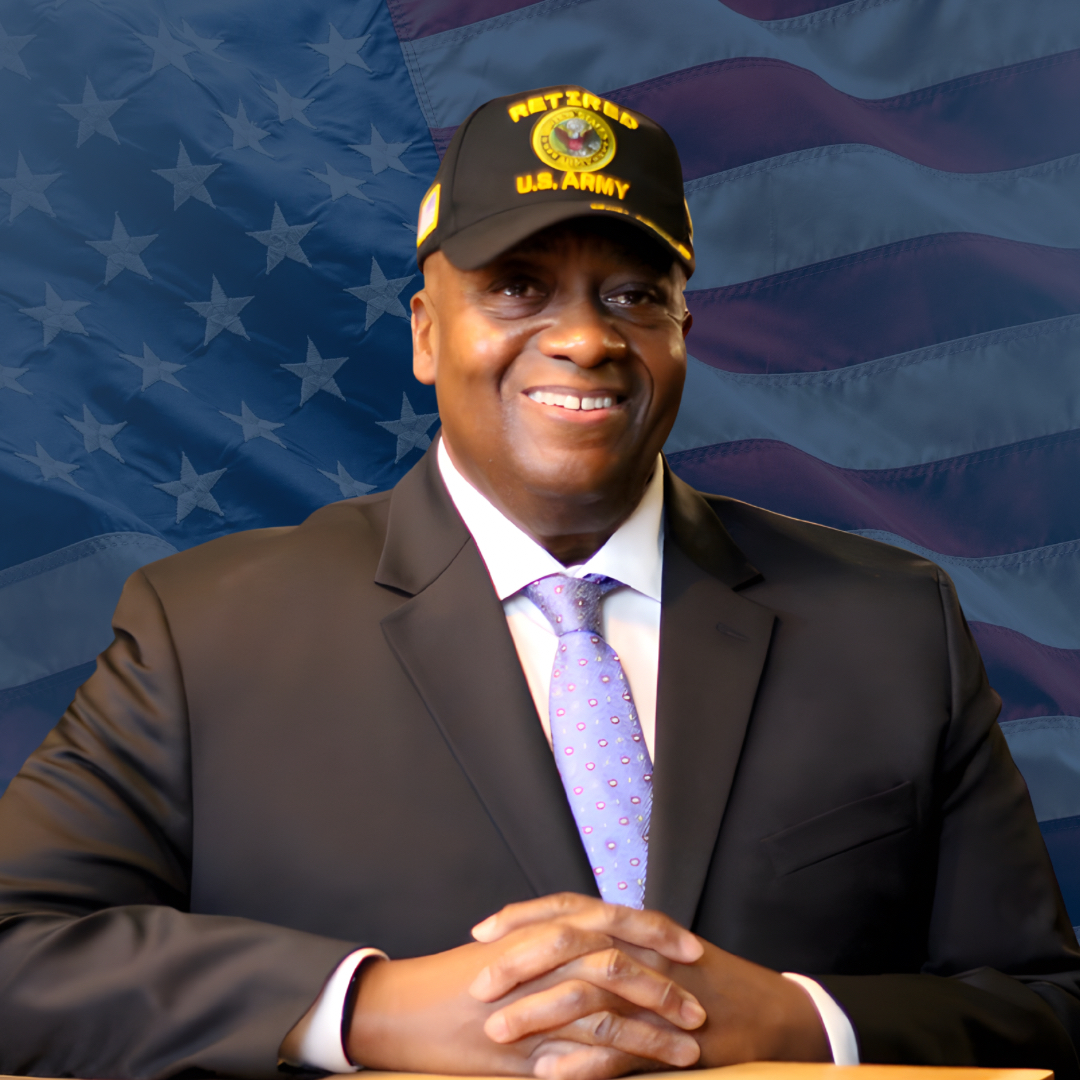
I, I, I wear, I was, I was talking to a friend of mine yesterday and, and I wear, I wear a cap a lot of the times that says retired U.S.
47:15
Army.
It's not something I started wearing when I was started running for Congress.
I've been wearing this hat since I retired from the Army.
So it's, it's, it's become part of my identity.
But I, she, she thought I was doing it to garner compliments from people.
47:32
And she says, I just you just don't need to wear that hat that much.
And I said, I said, I'll tell you one reason why I wear that hat.
It's not to garner compliments from people or somebody offered to buy me a drink or pay for a meal.
That that is not my motivation.
When someone walks up to or when I'm walking up on someone and they just see Rick crossing and they don't know anything about me.
47:55
What's what bias has kicked in with them.
If they don't know anything else about me, they see a big strong black man coming towards them.
If if they have the biases that I think most folks are having them, I'm seen as a threat immediately immediate threat.
48:16
And so this hat communicates a message that says I'm something else other than this big black man with some of which the bias that you've attached to me because I'm not a threat to you.
48:31
I'm not I haven't mean you no harm, but you've you've concluded that immediately.
And that hat is a is a way of saying, well, maybe not.
Maybe he's oh, he's a veteran.
Oh, OK.
He now becomes less of a threat, or at least that part of the bias has been at least somewhat put put to rest.
48:53
Yeah, it's so being aware that bias exists.
I I have to deal with, I get on an elevator, I see little microaggressions or they they clutch their purse or I get out of the car in the parking lot.
Somebody make sure that I know that they've locked their car door by honking the horn.
49:11
Oh, you know what?
I love doing that to other folks.
I know I do it.
I do it other I.
Don't want nothing in your car.
I don't want your purse.
I don't want, I just, it would just be.
It would just be nice again to to just just have the neutral assumption.
49:28
To just exist.
To just exist a human being I was.
Wouldn't that be nice?
It it's exhausting.
It is exhausting and I don't think people understand.
Not only that what I look at it is is a safety issue.
Yeah, it's a safety issue.
49:43
And that is how I have always viewed this whole because I do the same things you're talking about.
I don't have the privilege to wear in veteran retired hat, but there's other ways, you know, bow ties.
Bow ties.
Bow ties are very disarming, you know, But my thing is, I don't think people always understand that the need for that disarmament is because of the threat for our safety.
50:09
Because if you have built in bias where you have these built, you have a feeling of being threatened.
You don't.
You're not even 100% sure how you're going to respond.
Right.
Illogically, that's the part that scares me.
50:28
And I'm like, look, I I don't want none of that smoke.
There is no logic to that smoke.
Right.
And I don't.
I don't want none of it.
It it's caused me to do things or not do some things on the campaign trail.
50:44
I I don't knock on doors unsolicited.
They see me standing at their doorstep unsolicited.
It, it is an immediate threat to them.
So I have I would have to do things to to disarm a very alarming scenario in in most people, not everybody.
51:01
And I'm not painting everybody with this broad brush, but the risk factor for me too high is high, too high to go knock on a door.
So I figure out other ways to connect and communicate with people in ways that are less threatening for everybody and and more in a conducive to having the conversations.
51:21
You know what I really want to go back to?
I want to go back to the fact that you said this individual, your friend asked you, why do you need to wear that hat?
And that feels some kind of way to me because that's like, what's the problem with that?
51:39
I know and is that is that another bias signaling of I don't want your identity the rank higher than mine?
Yes, yes.
There's there's things there.
51:55
This particular person you nailed it to because that's, there's some things there and, and it's more there's a self-confidence thing and, and this person is dealing with that.
So, but this thing about being a friend and, and loving somebody is that you're not trying to change them.
You, you're, you're simply there for them.
52:13
Particular person had had asked me, well, why are you still?
You know, I wasn't that great for you in that situation.
I said, well, because I, I don't just write people off.
They, if, if anything, I'm going to, I'm going to pull you closer to, to, to figure out how we can move beyond this issue here.
52:32
So I'm aware of that, that that to me is a friend.
A friend doesn't try to change another friend like you and I are best buds.
We can call each other out on things, but in at the essence, we're accepting who you who we are for who we are.
52:47
Correct.
And, and we're aware of it.
We know the quirks and the weirdness and this and all the things that are about that person.
But OK, I know who you are, but I, you're, you're my partner and I love you.
You know that that's what it is.
You.
Want you want a person authentically them.
53:03
Right, right.
All right, any last words on your soapbox?
I see a better world out there where if we can address the issues and move beyond them, there's a, there's a ton of subtext issues that have to be addressed with regard to who this country is and what we're all about.
53:21
It would solve so many problems of immigration, of racial tension, socioeconomic conditions.
The fact that we've we, we, we still, we're still a colonial nation.
We have colonies, Guam, US Virgin Islands, Puerto Rico, where we got people who don't enjoy full citizenship when they're on their homework in their home territory, territory.
53:46
That's something that needs to be addressed.
Why is that still lingering out there?
I think we can be so much more.
The potential is there, the the foundations are there.
If we just address it and move on, I think there is so much upside potential for that, hey.
54:06
Facts.
I agree with you.
Thank you.
Yeah.
We don't we.
You know what?
I'm excited because we're about to get into some really good stuff here, Rick.
And you know what that is?
What's that, Sir?
The next segment is called 21 questions.
That does not mean we have 21 questions.
54:23
It just means that these are good in depth questions.
They might give 21 answers.
All right, so you ready to jump in?
Yes, Sir.
Let's do it.
OK, what motivates you?
What motivates me is to be a better version of myself every single day and always to be in the learning mode.
54:44
I think the scariest day for me will be the day where I think I know everything.
So I'm always on the quest for knowledge.
I'm always, I'm, I'm looking for the objective truths that are out there.
I look to to form a hypothesis if I don't know the answer and then experiment to get the answer.
55:01
And then from that answer and that objective truth is something that you and I then agree on so that we can move forward.
I think the lack of that means people are just drawing unfounded conclusions and then making decisions off of that.
So that's where it is with that, I'll be quicker with my answers because I can get pretty long winded.
55:20
So just keep me under the table here but.
Wait a minute, Rick.
This is your episode.
You do you.
Just do, Rick.
All right, All right.
What does success look like to you?
Success is when everybody around me is doing much better than they were when I got there and people are realizing their full potential.
55:42
I love mentoring and coaching people and to see aspiring leaders reach their full potential in the are thus making a better impact on the world is amazing to me.
Success is obviously the success and of my children and my grandchildren and and all of my family members.
56:02
Success is my 93 year old mom still feisty Still my mother has never heard me utter a cuss word a day in my life in her life and nor should will she ever.
And to always be there for for my mom.
What irritates you?
56:20
I don't like bullies.
There are.
There was.
In fact, I answered this question yesterday.
I don't like liars.
I don't like bullies and I don't like people who try to impugn the honor of other people.
There's those are three things that that that trigger me, but I know that they trigger me.
56:39
So I have to be, I have to be wiser in in my response because my immediate response is to go after it immediately.
I have to be.
I just have to be aware that the response has to be commensurate with what the activity in action is.
56:55
But I don't like people picking on other people.
Bullies are cowards with power and I'm just in that space to say no, that's not going to happen.
What worries you?
I don't necessarily consider them worries, but they are things that I, I've always playing out the what if scenarios.
57:15
I, I do contingency planning And so if I, if, if there was a worry is like, did I miss something in my, OK, if this happens, here are the, here are the things that I will do to make sure we have a positive outcome.
I do this four quadrant scenario planning thing and then there's two axes.
57:35
And normally you can, if you pick the right two issues or two main root causes on those axes, you can, you can plan for pretty much any contingency.
My worry is it did I pick the right two things that are essential in all four of those quadrants?
57:53
I know it's getting kind of weird and deep, but but but from that comes all the tasks and did I'm going to do this.
I'm going to do this.
You know, I've already planned out the okay when I win the primary.
Here are the things that I'm going to do if this happens.
58:08
I'm going to do this one if and and and, and when we get to Congress.
Here are the so I'm already thinking about my worry is that did I get everything?
Did I catch all of the different?
But this is not just me figuring out by myself because I'm not smart enough to to know all of.
That's why I got to pull people in from all sides to make sure we've gotten all the perspectives necessary to be an effective next version of myself as we go forward.
58:35
So it's it's a constant thinking of it like I wake up at two, 3:00 in the morning, like, OK, yes, Sir.
I was, I was up at 3:00 this morning just thinking through things of the day and, and are we going to be better off at the end of the day as a result of the actions that we're taking here?
58:54
So, yeah, it's I, I, but I don't call it worry, worry, worry bogs you down.
It's just, I'm just thinking of contingencies.
I'm a contingency thinker.
What are you grateful for?
My life health.
Without health, you got nothing.
59:09
You can have all the great aspirations in the world, but if you're not healthy, and there was sometimes where I was not the healthiest person ever.
I think my worst two years of my working life was when I worked from home.
I and I was an executive for a logistics company that had employees nationwide.
59:26
So I had to be on everybody's time zone throughout that day.
My days were long and I got so out of shape.
It was not a healthy environment.
It was it wasn't good.
So I'm grateful for my health.
I'm aware of the fact that you got to you got to be good to yourself.
59:46
That's not selfish, that's actually selfless because you're no good to anybody if you're not, if you're not physically, emotionally, spiritually in the game.
What do you want to be remembered for?
My children and are they doing what they're supposed to be doing in life, contributing members of society?
1:00:08
I'm not interested in a Rick cross and legacy type of thing.
You know, when you're successful is when other people are are doing and saying the things that you've imparted onto them.
That's when you say, oh, wow, OK, they did hear what I was saying.
They got it.
Or people come up to you years later and said, you know, Rick, you, you really made you know that that one conversation we had in in your office that day completely changed my trajectory of my, of my, of how I think about things.
1:00:36
And I've imparted those same things to hundreds of other people.
That's when that's when you know you're there.
It does.
It's not a plaque on the wall or I don't know that that doesn't motivate me at all.
It's Have you left things in a better state of being than when you got there?
1:00:54
How do you define love?
Love is unconditional and it it doesn't seek to change or transform.
You know, some people say, well, he's not anything now, but when I get a hold of him, I'm going to turn him into this, that and the other love doesn't seek to transform, it accepts.
1:01:10
It's, it's an acceptance thing for me.
And you can impart love on a whole lot of different kinds of folk.
My mother used to say, you don't hate anybody, son.
What you do is love the hell out of them in a way that causes them to see the true, the true nature of your spirit.
1:01:32
It's giving without any expectation of anything in return.
It's liberating in that sense because you're you're not looking for the negative all the time.
You're like I said, at the worst case, you're assuming a neutral position.
1:01:48
On the best case, you're assuming the positive aspects of anybody that you meet.
It doesn't mean going into something being naive, no, and it doesn't mean that you're not strong and, and exhibiting and demonstrating strength in that relationship.
1:02:05
It's it's being true to everything around you, even yourself.
And it's knowing that you have limitations and you have you have your own set of issues and biases and weaknesses to deal with.
What is the most memorable life lesson you learn from a parent, a guardian, or a mentor?
1:02:25
That I didn't have to have all the answers, nor did I have to pretend to have all the answers.
As a young officer and a young leader, I thought I I had to, I had to know everything and, and, and have all those answers and be the smartest person in the room.
1:02:41
That to me is a, I look at it, I look back on that it, it's laughable because if you're the smartest person in the room, what does that mean?
That means everybody that you've surrounded yourself with is Dumber than you.
And if you know your limitations and what you're all about, that means you have now set yourself up as the limiting factor for growth in any situation in any organization.
1:03:05
You see that playing itself out now in this current administration where they've there there, there's not, there's not a lot of smart guys built around this dude.
There may have been a chance of success had had that happen, but because that's what narcissism does to people.
1:03:22
So my lesson learned from from a early commander is you're not the smartest guy in the world.
You you keep demonstrating that every day, but you're acting like you are and and and and.
Stop acting.
First of all, recognize your own limitations.
1:03:38
You'll be a better leader if you do that.
Last question, you let me just set the scenario.
So you have been asked the keynote you are keynoting and in that space where you are about the keynote are, you know, a whole room full of your colleagues and peers.
1:04:01
And they're getting that they they getting ready to hear Rick come walk out on this stage and set it down.
But before we do that, we got to set a tone.
What is your walkout song?
You'll never find by Lou Rawls.
1:04:20
You'll never find as long as you live.
Someone who loves you tender like I do.
That's what I do.
And I that, that, that song those that that first set of lines sets the tone that, that that's what I'm coming with love.
1:04:44
I feel for you.
I'm going to hear what motivates you.
I'm going to ask you what's going on in your world.
That's that is most of what I say when I meet people.
Tell me what's going on in your world from your perspective, and then I'm going to actively listen to try to hear it from your perspective to understand what motivates you and what inspires you and what are you for?
1:05:11
That is the ultimate question.
What are we for?
Because that's where the magic happens.
You have survived 21 questions, Rick.
I can't believe you bust out that Lou Rose.
1:05:27
I hope that doesn't violate the copyright that.
I think we going to survive, we're going to be OK.
But it was smooth.
And I tell you this, I do believe that my parents still got that on vinyl and they basement somewhere that is that is that's smooth stuff right there.
OK, next segment.
1:05:45
Next segment's called word association.
So this is an opportunity.
I'm going to say some words to you and you going to tell us what comes to your mind.
All right here on the couch.
We have a very long standing tradition.
We have started with the same word for almost every episode because this is the word of love, community, family, unity, and that word is food.
1:06:14
So what comes to mind when you say food?
I think family gatherings.
I think the crazy uncle that the funny crazy uncle that always labels up the party as soon as he shows up there.
I think of don't eat Aunt So and So's potato salad 'cause you know what her kitchen looks like.
1:06:40
I think of I think of, I think of a pound cake that my mother, I gave the recipe to my mom that is, it's just, it's, it's a wonderful, decadent pound cake.
And the fact that I was able to share something with her and she still talks about that pound cake because I'm the only one that can make it for her.
1:07:02
So I think family and I think food.
I think family.
Love that.
I don't know how you bust that out that that you know what her kitchen look like.
Oh, because them them real things that wait them real things that get said.
1:07:19
Oh, cocktail or beer?
Cocktail I've never drank a beer.
I I don't I'm not a beer drinker.
My my drink of choice and I have 111 a week is a Long Island tea.
And if you do it right, you make it right.
1:07:36
You only have to do 1.
There's truth in that.
Yes Sir, Cause Long Island Iced Tea.
That's a ride.
It's a ride if you do it right.
Yes, Sir.
OK, the Long Island iced tea.
Oh, I heard that one.
That's a new one for the kosh, but I am familiar.
1:07:56
Shop local.
Oh, I tend to not do a lot of shopping, but I'm a shoe person, which is kind of odd.
I noticed people's shoes not it's not a fetish.
There's not anything creepy, but if somebody spends good quality time with their shoe selection, that says a lot about a person in my opinion.
1:08:21
And it are they taking care of their shoes.
There's one lady, her name is Karen.
She's a a beautiful soul.
She she's in a wheelchair, but every time I see her, she and I are talking about the shoes that she has.
1:08:36
She has an assortment of shoes.
So I'm always looking to and it's become this thing between the two of us.
I said, Karen, I love them shoes you got going on girl, you're rocking them shoes and and she just she she now she's a Rick.
Every time I know I'm going to see you, I put on a new pic.
1:08:54
I said, I've never seen the same pair of shoes on you, but that just becomes a thing that now that's a connection with, with, with, with, with she, with her and I, so she and I'm, I'm aware of, of my shoe choice.
I'm also aware of respect.
1:09:10
We're in your house and, and you're like I am when you come into my house, shoes stay at by the door.
And so and, and, and you have that same expectation.
And I love it.
I welcome it because it's respectful.
It's a It's a matter of respect.
Respect and and also I just it's a cleanliness thing, you know, I just think you know you and it's not intentional, but you out here walking everywhere, you don't know what you're bringing in.
1:09:36
That's right.
I don't know what you're bringing in.
I hear you.
I'm with.
You all right?
Well, OK, well, we know you like shoes and we ain't doing a lot of shopping.
But.
All right, music.
1:09:54
My music tastes are eclectic, but I grew up on Motown, you know, and Smokey Robinson, the Temptations, and then other Bill Withers.
But I also like some of the early rock'n'roll stuff.
1:10:12
The Eagles.
I love jazz, smooth jazz.
I love interpretive jazz.
Jazz to me is the most difficult, Courageous type of music to be played because it requires courage, because it's a language between the, the, the musicians, They're, they're talking to each other, they're working with each other on the fly, on the spot.
1:10:33
It's a courage that when I, when you hear it, you each, oh, these guys are in a dialogue with one another.
I love that music can bring us together.
I was at this event last weekend and they were doing some Native American folk music.
1:10:51
And I'm tell you what, I was wiping tears out of my eyes with this one particular song that they were playing.
And we, the whole audience, we asked them to play that song again.
And then after they played the song, it was my turn to get up and speak.
And I was like, I'm still wiping tears out of my eyes.
1:11:06
I said, wow, that that moved me to my soul.
And in fact, that's one of the things I'm doing this weekend.
I actually put it on my calendar to go see them later this evening at another location because it moved me that much.
So I'm, I, I truly believe music, it can calm you, it can excite you, it can anger you.
1:11:27
It just depends on what you, what you want to do with it.
For me, I look at it as a bridge to bring us together.
It's something that can unite us.
Streaming, like as far as a streaming service that I, it's a, it's a dream of consciousness.
1:11:43
Well, it's it's it's, it's your word association.
So you get to take it wherever you want to take it.
Well, I, I would think about it more of a stream of consciousness.
I have been accused by some people on my campaign team that I can get professorial in the way that I talk to people because I'm just, I'm, because I'm, I've connected with you.
1:12:04
So there's some things that, that I would love to get from you and there's things that I want to share with you.
So it just becomes a stream of consciousness conversation.
And I'm always looking for that common ground, that common thread.
Like if you tell me something about yourself, my mind instantly goes to how can I connect with what he just told me about himself?
1:12:21
That, that now we have a bond and then how can, how can we grow from that and, and move forward from that?
So that then becomes this back and forth, like, oh, wow, well, you did that.
I didn't, you know, I, and it's not about trying to top you.
I'm not into that topping your stuff where?
1:12:38
Well, I did this and I'll do that.
No, it's like, tell me more about that.
How did you feel when you did that?
And I'm now I'm listening to what you're saying that it's that, that to me is streaming as, as far as that goes between between two people or three people or a whole group of people.
1:12:53
I'm looking for that common experience.
And from that, that's where the growth starts to happen.
Last word.
Yes.
Community.
Community is folks, people.
It's not some nebulous thing.
It is real, genuine.
1:13:11
It's the neighbor who calls you because they noticed that you didn't pull in your trash can and and because they know you, they know how fastidious you are.
They said, Rick, are you OK in there?
You know, that's community.
1:13:27
Community is watching out for the other neighbors kids and saying, I know your mom and daddy would not appreciate you doing that.
You need to get that right.
And them saying yes Sir, thank you.
Community is welcoming and it doesn't exclude.
1:13:47
It's looking for ways to say yes more so than it's saying keep those people out or whatever.
You start to see euphemistic language popping up, multifamily homes.
And there's another euphemistic term.
I'm saying that that is euphemistic for, for something else, some group of folks that somebody doesn't want in their world.
1:14:07
Not buying that community means strength because we're Better Together than we are apart.
That's what community means to me.
OK, you survived word association, next segment.
1:14:28
Next segment is called the Kosh Hidden Gems.
And what that is, it's an opportunity for you to share a hidden gem with the Kosh listeners.
Now this gym does not have to be located here in the Kosh.
It is a hidden gem wherever you want to be it to be.
1:14:45
It could be something that you think a lot of people may not know about.
It could be something everybody knows about, but maybe they don't know the details, the really cool details about it.
What is your hidden gem?
I think the hidden gem in this district, in the Fox Valley, in the 8th district, is the the, the number of veterans that exist in this community.
1:15:12
I can't get it verified.
I'm still looking for the verification.
But I've heard it said that per capita there are more veterans here in this area than in any other place in the country, which I find amazing because I think about places like Texas and Florida and on the East Coast where there's high concentrations of military veterans.
1:15:35
But but per capita, when they said when, when you insert that into the conversation, it starts to make sense.
There's a lot of veterans here who have a lot of power and influence if they choose to use it in a constructive way.
1:15:52
There are there are so many.
I've connected with so many veterans groups in my during this campaign and forged some genuine relationships with a lot of them.
What what strikes me is that they're, there's a lot of them, but they're not they're fragmented in the sets that they're, they're unto themselves.
1:16:11
And there's, there's a few times like Pulaski, for example, is an exception to what I just said because they had four different veterans groups that came together to put together this wonderful monument that, that that showcases living veterans on a wall.
1:16:28
It, it's akin to the Vietnam War memorial in DC, but it, this is in, instead of deceased veterans, this, these are live veterans.
I, I could go today and tomorrow put and, and fill out a form and get my name put on that wall.
1:16:44
It's a wonderful tribute to the, to the existing living veterans in the community.
And I think to myself, what power, potential power exists with veterans in this area?
If we would just come together collectively and express our issues and concerns in a way that is productive with our foundation being the fact that we sworn oath to support and defend the Constitution of the United States.
1:17:10
That for me is a hidden gem that needs to be taken full advantage of.
Another hidden gem, I, I, I would call it a component of that veterans thing, are the mung veterans.
These are the folks who served and supported our country during the Vietnam War, particularly in Laos and Cambodia, and sacrificed a lot of blood and treasure and family and country to support us.
1:17:37
And who are now living in exile and living as residents and citizens of the United States, but who have yet to be properly recognized for their services.
And I think there's a gem of an opportunity that needs to happen immediately to give formal recognition, VA status to our among veterans.
1:17:57
I think anything short of that is unacceptable.
Facts.
Yes, Sir.
OK.
Now it is time for my favorite segment and my favorite segment on the cash is known as story time.
1:18:17
And with story time is is an opportunity for our guests to tell the cash listeners a story.
That story can be about absolutely anything.
Rick, where are we going?
What's your story?
Well, let's go back to when I was, I was a young captain, I was a troop, troop commander and I was, I was, I had the mission of flying border security.
1:18:45
Along at the time was the East German, West German Czechoslovakian border.
We flew border surveillance missions.
These are live scenarios where any screw up could get you killed.
And I was I was on a flight with one of my I was flying in a Cobra, the attack helicopter.
1:19:04
This is the precursor to the Apache.
This was a Cobra attack helicopter.
And I remember I was flying with with a gentleman.
His name is Tim.
And and just the other day he sent me a photograph that I hadn't seen or thought about in years.
1:19:22
I'm not a nostalgic person.
I don't go back and think about all those.
But he says, he says, Rick, I've been following your campaign and look at the picture that I found of you back in the day.
If you can picture this, this young captain sitting on the what was called an ammo Bay doors where the ammunition slides underneath the aircraft of a Cobra attack helicopter.
1:19:44
And I'm sitting there with my flight suit on and, and, and it just it, what, what came to me was wow.
There's, there's been a lot of times where I've been honored to be in positions where I was the only one doing it.
1:20:00
I was the first one doing it, the first of my family, the first this, the first that, you know, I know you can relate to being recognized as he's the first of his kind to do this, that or the other.
And I'm and I'm still living with the first thing.
1:20:18
It's in a way it's, it's, it's, it's commendable, but in a way it says we why are we still talking about being the 1st at doing something?
We should first of all, we should be celebrating the fact that we are diverse, that we have all of this capability, that there are no limits to what anybody can do.
1:20:37
But yet and still we're still dealing with that.
I get, I've gotten asked that, you know, you're the 1st black candidate to run for Congress in the 8th district.
I said, yeah, but I'm also the first Rick crossing to run for, for, for Congress in this district.
What?
1:20:52
Let's focus on the things that that unite us.
And that's and and maybe by me being in here, I can be more of a, an inspiration for people coming up behind me to, to to to flood this door.
I told a group of assembled Latino community members just last night about how much power they have.
1:21:15
I said you're 18% of the population here in, in Green Bay, WI.
You could, you could literally come in with the power that you have and, and, and run large elements of this community.
1:21:31
You just.
Facts.
You just facts.
Yeah, you just have to want to do it.
And and so the story is we can do so much and and sometimes we have to stop with the rat race to say, you know, yeah, we got this, we own this.
1:21:51
There's nobody else going to write our future for us.
We we got this.
So I guess that's a long way around of saying that the, the power resides in us just like that little, that young captain sitting on the ammo Bay of age 1 Cobra way back when, when, when a lot of people said you can't do that or we don't normally do that sort of thing.
1:22:12
And my answer then and now is, Oh yeah, watch me, watch me.
So as we go into this candidacy, as we come up on August 11th, I'm saying to that young captain that I'm here because of you, of, of, of the mentality and the ideology that your father and your mother set for you.
1:22:34
And this is the this is the, this is the, this is where you are on that journey.
And my mother's still to this day because I called her the other day.
She says Ricky, because she still calls me Ricky.
When's it ever going to be enough for you?
I said, mom, I don't know.
I'm not there.
1:22:50
I'll let you know when I get there.
But you've always taught me to to move things forward.
And so that that's what that's where I'm in this.
So that's who I am.
Thank you, Sir.
Fantastic.
1:23:09
That was awesome.
Well, OK, Rick, here's here's what we going to get ready to start doing now.
Yeah, we going to get ready to start wrapping up this episode.
All right?
OK, So, Kosh, listeners, you already know when you hear that we get ready to start wrapping up this episode.
1:23:28
So you know what I'm going to say to you?
I want to say thank you, thank you, thank you, thank you for spending time with us.
Thank you for giving us your minds and ears.
Thank you for caring about another amazing neighbor, another amazing community out here, or a community member out here helping to make our community a better place.
1:23:49
Truly.
Because you know what?
Running for office is not for the weak.
Noah is serving this country.
I loved everything about this conversation.
There were lessons here, there were lessons here.
And, and I hope you really dig into some of these lessons.
1:24:08
I think profound things were said.
There were honest things said.
And if anything, let this serve as a reminder that we have really good people out here trying to make really good things happen for all of us.
1:24:26
And we can't take that for granted, right?
So let's be good neighbors, let's be good humans, and let's be an active voting electorate.
There's something to that.
1:24:42
Let's let's make sure that we are exercising the privileges that we have been given here.
So cashless.
You know what I'm I'm about to say here we are trying to become the number one podcast in Wisconsin, but I can't do that without your help.
1:25:00
So what I need you to do is while you're listening to this and you're thinking, man, Timber, you should have asked this or Timber, you need a new segment about this.
Well, you got to let me know.
Or maybe you're thinking I would be a great guest or I know who would be a great guest.
1:25:18
Well, you got to let me know.
And you can let me know by emailing me at askthekosh@gmail.com onceagainthatisaskthekosh@gmail.com.
Also, you know, I do believe this is a pretty awesome podcast and it's something that truly elevates our community because I think a stronger community is 1 where we know our neighbors and this is an awesome way for you to get to know the amazing people out in our community just doing amazing things.
1:25:51
You know, if you really listen to the caution to follow the cash, we have literally interviewed all sorts of people from all sorts of backgrounds and all sorts of identities.
We, we say no to no one.
If you are bold enough to come sit in this chair and have this conversation, you are welcome to come and be on the couch.
1:26:10
And if you get to learn about your neighbors, I promise you that these episodes, these conversations we have breathe life back into you and belief back into who we are as people and humans.
OK, so now on to the real fun stuff right here.
1:26:30
Let's get this in.
That means that it is shout out time.
So Rick, who you shouting out?
I got to give definitely a shout out to my campaign team.
I call them my fire breathers.
Julie, Amy, Dawn, Lindsay, all smoke bringers.
1:26:51
They are powerful, strong women, one and all.
They appropriately push me around and challenge me in ways that have made me a better person with better perspective.
They are out ahead of things, which is where I want people on my team to be. 1015 miles ahead of me, anticipating things.
1:27:12
And, and truly they are representatives of the strength that is Wisconsin and I'm truly grateful to the energies and the results that that they are doing.
Another shout out is to every person that I have met on this campaign trail up to this point and the people that I have yet to meet.
1:27:36
There are some wonderful folks, well meaning people, people who are looking for leadership but also looking to get involved in any way that they can to support the movement, the forward movement of this of this country and of the state of Wisconsin and of their communities.
1:27:55
There's a lot of caring people out there and I've come to appreciate everyone for what they bring to the table.
I'm talking farmers, teachers, union members, housewives, small business owners, large business owners.
Everyone that I meet all wants to do the right thing.
1:28:14
What we need collectively is a common definition of the right thing.
Some.
It's amazing the momentum and the power that resides in all of these good folks.
So shout out to everyone.
Facts.
1:28:30
OK, kosh listeners, I'm going to keep my thing.
You know, I usually have a a big long list, but I didn't I didn't make a big logging list this week.
So instead, what I'm going to do is I'm just going to make one huge thank you to the Kosh listeners out there.
1:28:49
I appreciate y'all and I appreciate all the support that y'all give me and all the various ways that you support me, whether it's rocking a Kosh T-shirt, whether it's stopping me on the street and sharing with me about an episode that you listen to.
Some people, Just the fact that you know we exist and maybe you've never listened to an episode and you still cheer, cheer it on because you know, these conversations are valuable.
1:29:16
I thank you and give you a huge, huge shout out.
I appreciate it.
I want to send a shout out to everyone out here who is enjoying this summer because for whatever reason I am feeling this summer, it is a blessed summer.
1:29:35
And what I want to encourage, just all to do is get out here and actually enjoy this thing because the weather ain't too bad.
This is a pretty fire summer.
So go spend that time, go see that band, go to that festival, go to that farmers market.
1:29:50
Get out here and be in it.
Be in it and appreciate what we have been blessed with.
Celebrate these freedoms during this 250th.
That's what I'm going to say now.
The real thank you and the most important thank you and shout out that I always have to give has to go to my wife for continuing to let me make this podcast in the house.
1:30:17
So baby, thank you as always and I love you.
All right, Rick, we got a little bit more business to do.
Yes, Sir.
And this is it.
This is the last things on the list.
And it comes down to this.
I'm going to give you some multiple choice.
1:30:32
You got some choices here.
All right, all right, AB and C Option A share some parting words of wisdom with Akash listeners.
All right, Option B, tell us what would Rick today tell 13 year old Rick?
1:30:55
Option C good multiple choice always has an all of the above.
So you can do both.
So what?
What are you going to bless us with?
What Rick would tell 13 year old Rick, I think about what a 13 year old is and is doing, that frontal lobe development hasn't been fully developed and he's contemplating doing stupid things unregulated by convention and wisdom.
1:31:26
I would tell 13 year old Rick to keep his options open, wide open and keep questioning the things that that he sees because we've been given a gift to wonder, to question, to scrutinize.
1:31:47
And, and and there's an expectation that you use those gifts in constructive ways, not in ways that that do harm to yourself or to anyone around you.
And if it's right, if it's good, it should stand the scrutiny of your questioning and don't ever back off from that.
1:32:07
Keep going down that path.
And because current Rick is talking to has the benefit of hindsight, make sure that everything that you do remains honorable because from that comes growth and positive movement for not only yourself but for everybody around you and stay true to yourself.
1:32:34
All right, Rick, what you think?
Sir, if I have to give a shout out to to you, if I can give a shout out to you, I'm giving it right now.
I love you, buddy.
I, I, I have.
This is one of the instant friendship scenarios between you and I and I, I appreciate you and that that appreciation grows every single day and every time I interact with you, it just confirms that I'm in the presence of a genuine human being.
1:33:02
So thank you for Sir.
I appreciate that the cash.


 Apple Podcasts

 Spotify

 Castro

 RSS Feed

 Breaker

 RadioPublic

 PocketCasts